

Home technology can easily be tailored to suit the depth of your pockets. You might be after easier heating and lighting controls, a way to keep an eye on the house while you’re away or a cinema setup for family film nights. The right solution might start with a £20 app-controlled lightbulb that can be
The post Smart Home Costs: What to Budget for Home Technology appeared first on Build It.
Home technology can easily be tailored to suit the depth of your pockets. You might be after easier heating and lighting controls, a way to keep an eye on the house while you’re away or a cinema setup for family film nights.
The right solution might start with a £20 app-controlled lightbulb that can be turned on or off remotely. And it could reach somewhere around the £100,000 mark for a completely integrated smart home system where everything is centrally controlled, from security to media streaming, with tip-top audio-visual equipment to boot.
Smart home budgets at a glance
Beyond individual gadgets, smart home technology can bring lighting, heating, security and entertainment together, allowing you to manage several rooms from shared controls. The cost depends on how much of the house you want to cover and the equipment you choose.
These indicative examples from CEDIA, the home technology trade body, show what different budgets could provide:
| Budget | What it could include |
|---|---|
| £15,000 | Wired and Wi-Fi infrastructure; music in several rooms. |
| £50,000 | Music and television in several rooms, plus mood lighting and more comprehensive networking. |
| £90,000 | Higher-quality equipment and shared controls for lighting, entertainment and heating throughout the house. |
| £150,000 | Additional touchscreens, more extensive systems and a higher-specification home cinema. |
Jump to Explore these smart home budget examples in more detail
Entry-level home technology for smaller budgets
For smaller budgets, or if a renovation project doesn’t involve extensive electrical works, wireless and plug-in consumer products can be a great option.
“These are designed to enhance the efficiency of your home, saving time and energy while enabling you to set scenarios for your daily routines,” says Katrina Mills, smart home buyer at John Lewis & Partners.
Popular starter options include the voice-activated Google Nest Hub and Amazon Echo, both of which can act as the base control for compatible products around the house – from Philips Hue lightbulbs to video doorbells. Alongside playing music and providing reminders, these devices give you a way to start improving how your home works for you.

Google Nest Thermostat E, available from Argos, offers app-controlled heating. It’s compatible with Google Home and Amazon Alexa, but not natively through Apple HomeKit
Smart speakers can be paired effectively with compatible thermostats, such as Hive or your heat pump control, so you can ask for the heating to be turned up without leaving the sofa.
New products are coming along all the time, but compatibility is sometimes an issue, so check they will work with the systems you’ve selected.
Katrina’s advice on an entry-level setup is to “start with lighting, heating and home security, as these tend to be the most beneficial categories in a smart home. There are enough products out there to see tangible results.”
You don’t have to do it all at once, either. “You can add new elements as and when you’re ready, allowing you to get to grips with each product as you go,” she says.
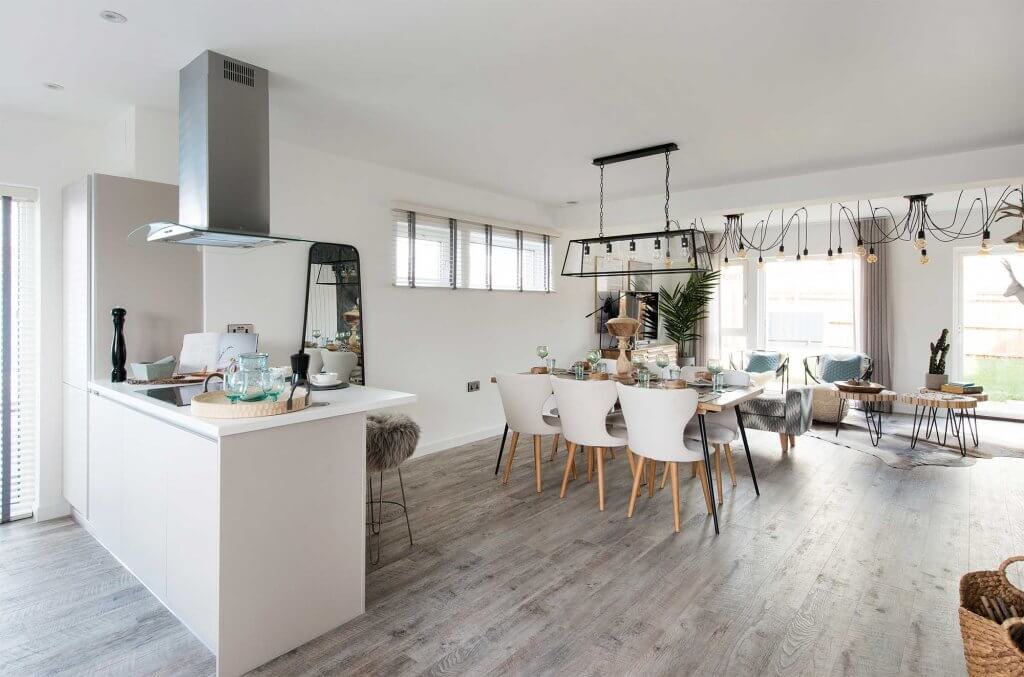
Trivselhus worked with interior design firm New i.d to install Apple HomeKit-compatible products at Sommar Place, bringing domestic and entertainment controls together
Smart home control is becoming the norm. Bespoke package house builder WeberHaus, for instance, has teamed up with Apple HomeKit to enhance your experience in the finished property.
Swedish firm Trivselhus used the same platform at its Sommar Place development in Milton Keynes – using compatible products to bring together lighting, heating, window blinds, security, audio-visual and domestic appliances in one eco system.
Integrated smart home systems
If you are self building or undertaking a substantial renovation, it could be a wasted opportunity to rely only on plug-and-play products.
If you’re wiring a home from scratch, the benefits of an integrated system are compelling and definitely worth considering whilst you have the chance.
“The important thing is making sure the cabling is done in a way that allows you to be flexible,” says Andy Mack, director of Cyberhomes. “If everything is star-wired back to a central position, that’ll give you the ability to do almost anything with the infrastructure in the future.”
An integrated system can control features individually, from heating valves to ceiling lights. It can also group elements together – so, when you leave the house, a single ‘all off’ button can turn down the thermostat, close the curtains, set the alarm and put the lights on security simulation mode.
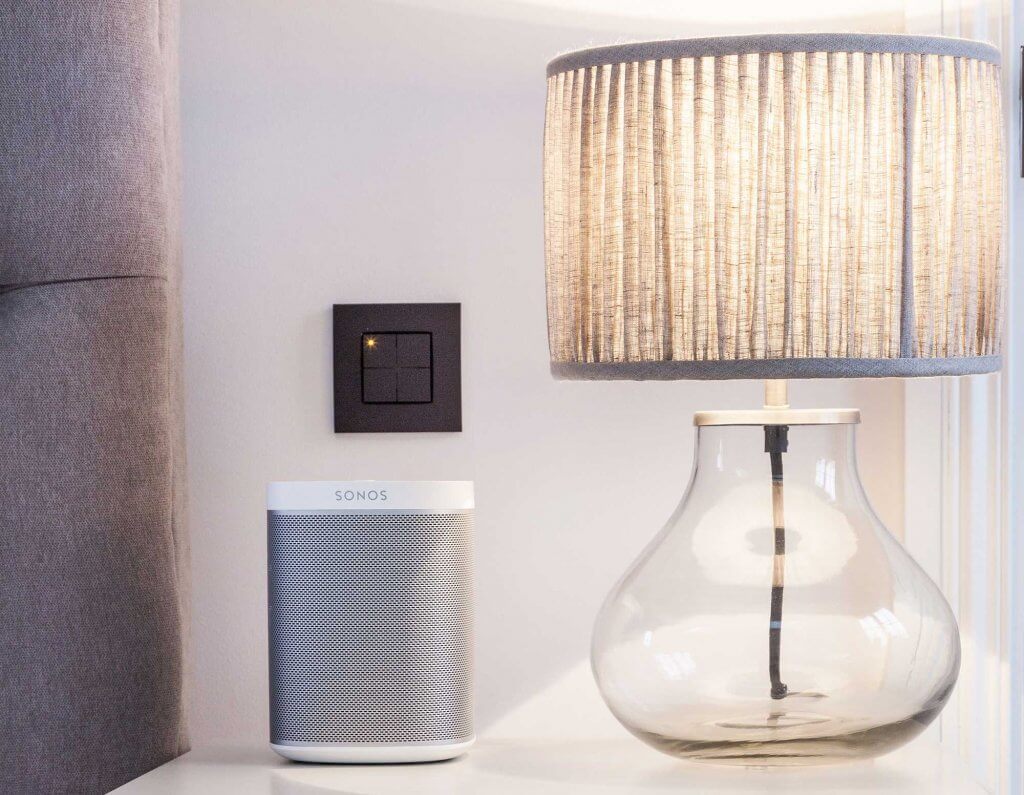
Niko wall controls can bring several lighting circuits together into a scene, allowing you to select the combination you want with a single button press
Enhanced automation can make daily routines easier, save energy and improve your everyday experience of the home. Importantly, it doesn’t have to come at a cost to simplicity and intuitiveness.
Take lighting: wall controls remain part of the setup, alongside smartphone and central touchscreens, so walking into a room and turning the lights on still feels totally natural.
What’s different is that a single button press can operate multiple circuits to create different moods – for instance, in an open-plan kitchen-diner you might have one combination for cooking, another for eating and a third for relaxing. This can also mean fewer switch plates and less cabling to the wall controls.
If you’re worried that all this might be expensive, it doesn’t have to be. Much of the cost of a smart home lies in hardware you choose, such as AV equipment. Getting the cabling in place is actually relatively cheap during the building phase – in fact, a smart home’s reduced wiring and switching demands versus traditional electrics can mean there’s very little uplift in infrastructure costs.
So, install your infrastructure with expansion in mind. “If, for example, you’d like in-ceiling speakers but can’t afford it, pull in a cable now, mark on the drawings where it is, and at a later date you can cut a hole and the cable’s there ready for it,” says Andy Moss, managing director of Moss Technical.
The post Smart Home Costs: What to Budget for Home Technology appeared first on Build It.