DC Alexander Park / Brooks + Scarpa Architects
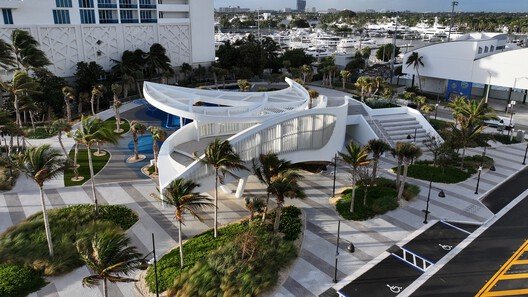
As an extreme coastal beach environment, the park site must solve for flooding and constant salt spray. The park had to solve for multiple issues related to permitting and flooding.

 Md Al Amin Sohan
As an extreme coastal beach environment, the park site must solve for flooding and constant salt spray. The park had to solve for multiple issues related to permitting and flooding.
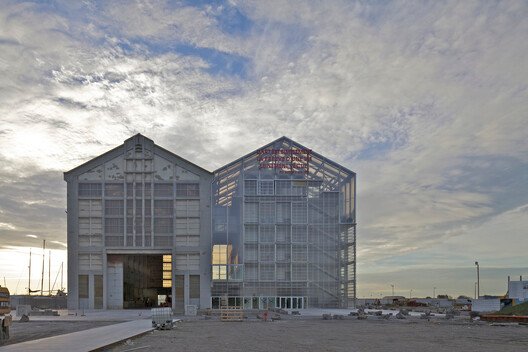
In a world facing ecological exhaustion and spatial saturation, the act of building has come to represent both creation and consumption. For decades, architectural progress was measured by the new: new materials, new technologies, new monuments of ambition. Yet today, the discipline is increasingly shaped by another form of intelligence, one that values what already exists. Architects are learning that doing less can mean designing more, and this shift marks the emergence of what might be called an architecture of restraint: a practice defined by care, maintenance, and the deliberate choice not to build.
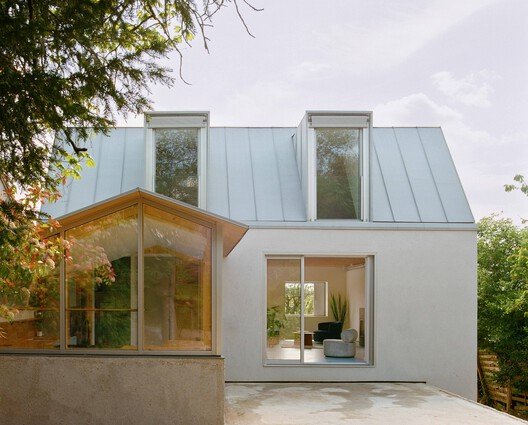
This house was built in the 1980s, following the design codes of the time: a semi-subterranean ground floor housing the garage and boiler room, a raised floor above the garden for the living areas, and an attic converted into bedrooms. In the early 2000s, an extension was built on the garden side to accommodate a large living room, but it quickly showed signs of deterioration. After a decade of legal proceedings, the owners were finally compensated for the damages suffered. They then decided to move on from those difficult years by considering the construction of a new house. However, the architect proposed a different approach: to retain as much of the existing structure as possible and demolish only the damaged sections.
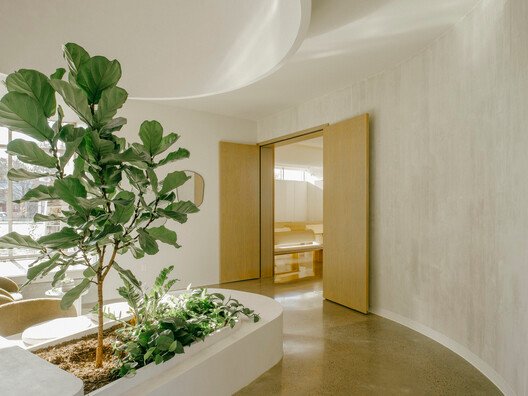
In late 2020, La Seigneurie Funeral Home approached ultralocal architects to undertake a major renovation and expansion of their building in the Beauport neighborhood of Québec City. The initial request was to double the existing floor area by adding a second level. However, early in the design process, our team proposed a different, more meaningful approach: to expand horizontally rather than vertically.
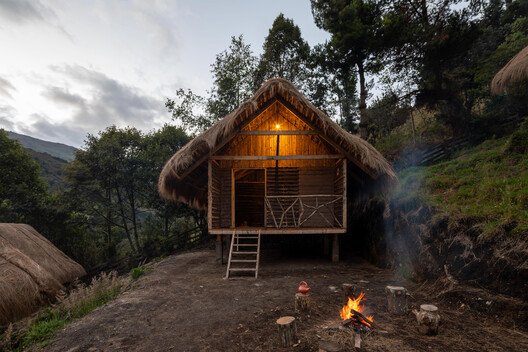
We are at the foot of the majestic Volcán el Altar, at an altitude of 2,800 meters above sea level, in the Inguisay Sector (the Bocatoma of the Río Blanco). The Zoila Martínez Workers’ Association promotes community tourism and environmental responsibility. With new initiatives aimed at finding a balance between modernity and the traditional vernacular architecture of the area, it has created four mountain lodging shelters designed to offer panoramic views of the Andean moors.
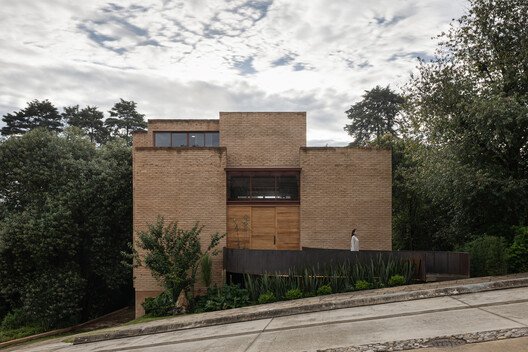
On the outskirts of San Cristóbal de las Casas, in the misty forest of Huitepec, the house emerges from the landscape as another natural element. Its presence implies a convergence with the essence of the site, becoming a symbol and language of protection, a gesture of safeguarding the identity of the place. It is not a foreign object, but a fragment of the mountain, a inhabited sculpture that breathes with the same cadence as the forest. Its shape does not seek to impose itself, but to coexist; following the slope as one draws a dialogue with the earth. It only cements what is necessary, allowing the mountain to maintain its pulse.
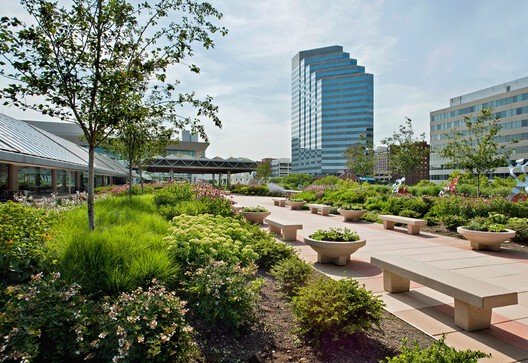
Cities bring together the best and worst of the human condition. They concentrate opportunities for work, social networks, and cultural production, but they also expose deep social inequalities. Among the many forms of urban exclusion are limited access to transportation, housing, leisure, or safety issues. One form that is rarely discussed is thermal inequality. In lower-income neighborhoods, where there are fewer trees, parks, and permeable surfaces, heat accumulates and thermal discomfort dominates, resulting in higher energy consumption and health risks. As concern about the climate crisis grows, this discussion becomes more urgent: extreme heat is no longer just a climatic phenomenon but also a spatial expression of inequality.
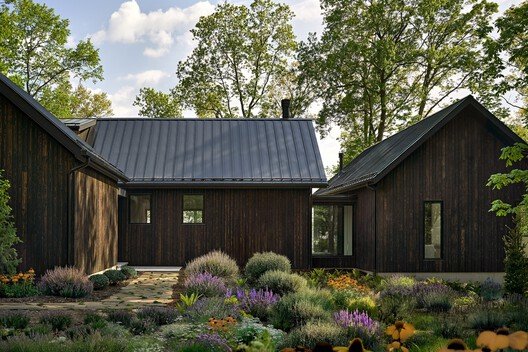
Located in Hillsdale, MI, Baw Beese House is a multi-generational lakeside vacation retreat. The project is a contextual response to social, familial, community, economic, and health conditions, allowing multiple generations of family members to safely occupy a place together or separately for years to come. The lake house comprises three distinct living areas, which can operate independently or together as a whole, depending on which family members are present at the time.
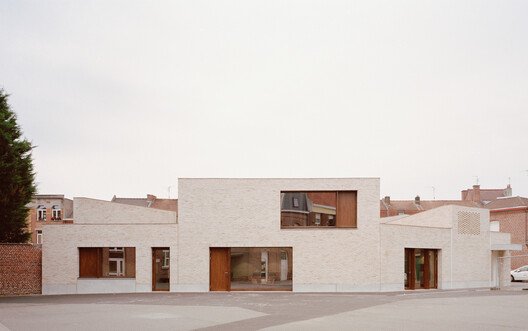
Located in the heart of the Pont district in Marcq-en-Barœul, the new Youth Center is set within a dense fabric of terraced brick houses with narrow, colorful façades. This domestic landscape, composed of plots barely five meters wide, forms a subtle palette of orange and brown tones. Within this intimate context, the challenge was to establish a dialogue between a 600 m² public building and the delicate scale of the neighborhood.
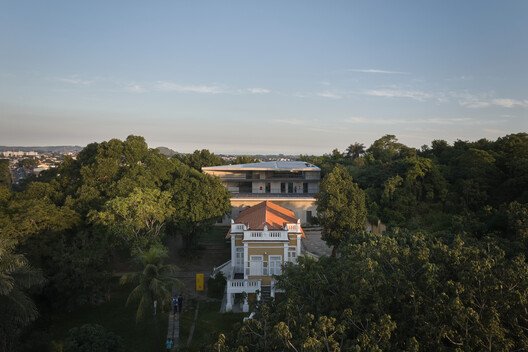
The expansion of the Ser Cidadão Headquarters in Santa Cruz, the west zone of Rio de Janeiro, embodies in architecture the commitment of a social organization to human and community development. Since 2002, the organization has been involved in projects related to education, culture, work, and health, promoting opportunities for youth in vulnerable territories. In 2006, it received a donation of a historic mansion, the former residence of doctor and senator Júlio Cesário de Melo, whose legacy of care inspired the very essence of the project: to build spaces that welcome, educate, and transform.