
Transforming your home can take many forms, each bringing its own character and benefits. An extension can significantly improve your home – creating flexible space that can be used however you like. But are your priorities more aligned with a traditional rear extension, or a conservatory-style structure? Choosing between a new extension or a conservatory
The post Extension or Conservatory – What’s the Difference & Which is Right for You? appeared first on Build It.
Transforming your home can take many forms, each bringing its own character and benefits. An extension can significantly improve your home – creating flexible space that can be used however you like. But are your priorities more aligned with a traditional rear extension, or a conservatory-style structure?
Choosing between a new extension or a conservatory involves balancing aesthetics, practicality and your budget, and it’s important to weigh up the pros and cons of each to ensure you’re heading in the right direction. Here, I’m investigating how these two options differ in design potential, costs and overall performance to help guide your decision.
Jump to home extension FAQs answered
What are main differences between an extension & conservatory?
Technically speaking, an extension is a permanent structure that forms an integral part of the house and must comply with the full suite of Building Regulations. While it doesn’t have to use the same materials as the existing property, it must meet modern performance standards and is usually connected through shared walls, a continuous roof and an open internal layout.
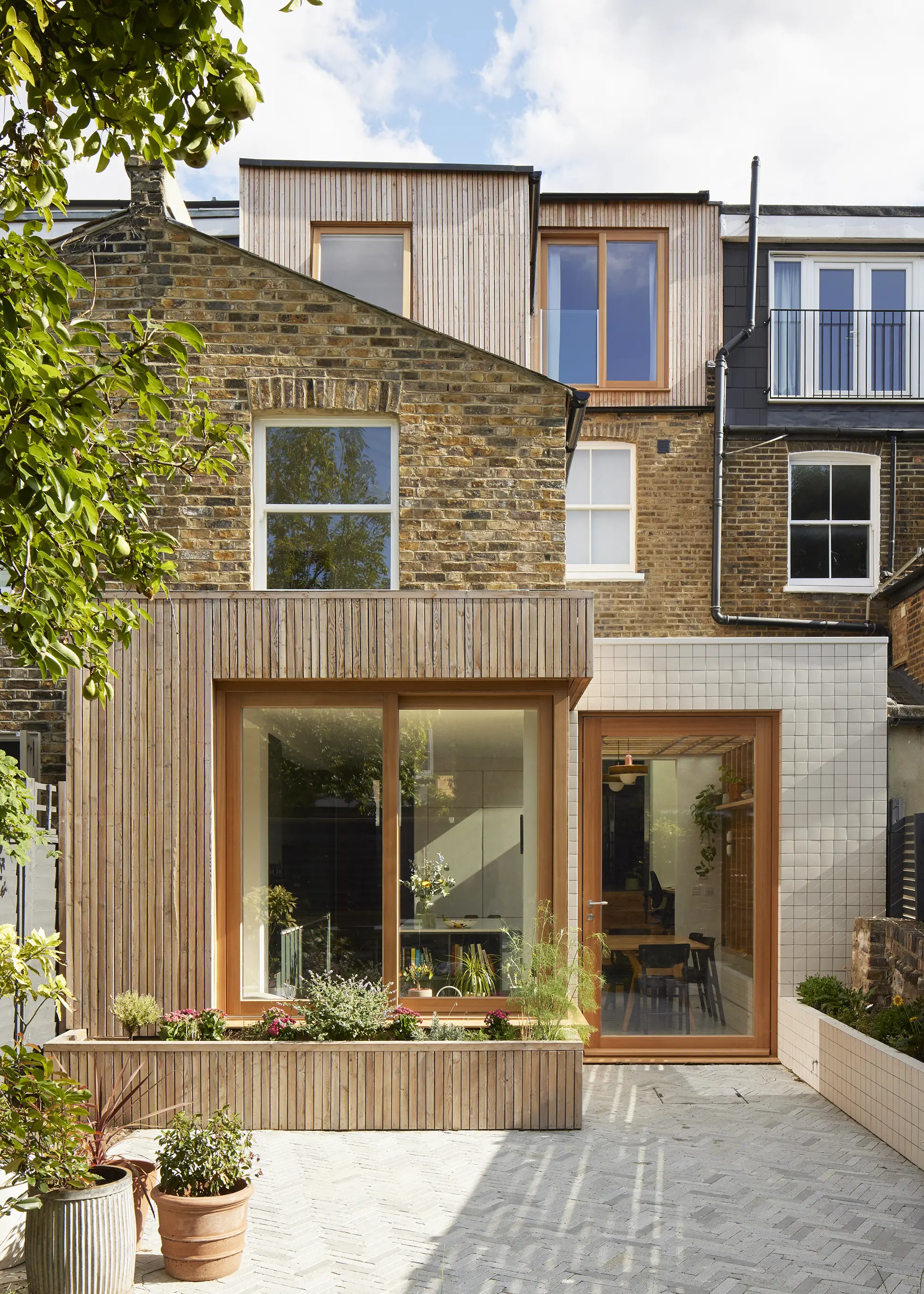
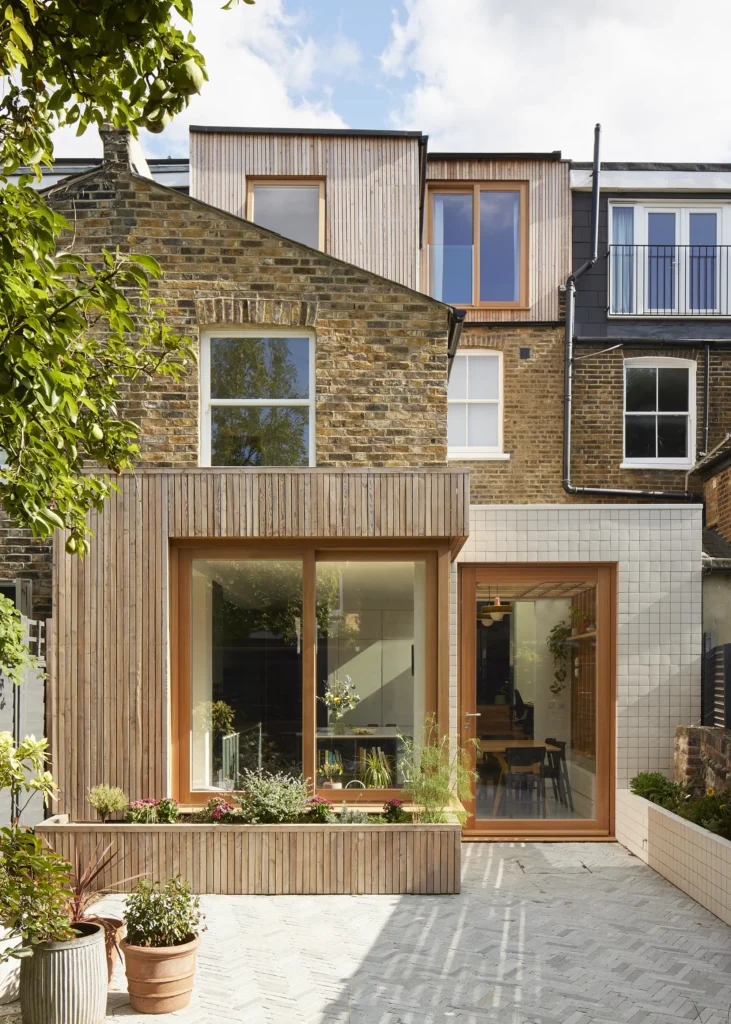
Designed by Yard Architects, this sleek London extension houses a kitchen diner and sociable seating nook, which overlooks the garden. Photo: Richard Chivers
A conservatory, by contrast, is a lightweight structure defined by extensive glazing – typically at least 50% of the walls and 75% of the roof. These structures are often built in PVCu, aluminium or timber. Many conservatories are exempt from full planning, and can be completed under permitted development (PD). Conservatories are typically not subject to a Building Regs approval, as long as they meet certain criteria, such as being under 30m², are separated from the main house by external doors and aren’t connected to the home’s main heating system.
So, the clearest distinction between the two is that an extension is a permanent, fully-integrated and regulated part of the building; while a conservatory is largely self-contained and designed to give you a garden room.
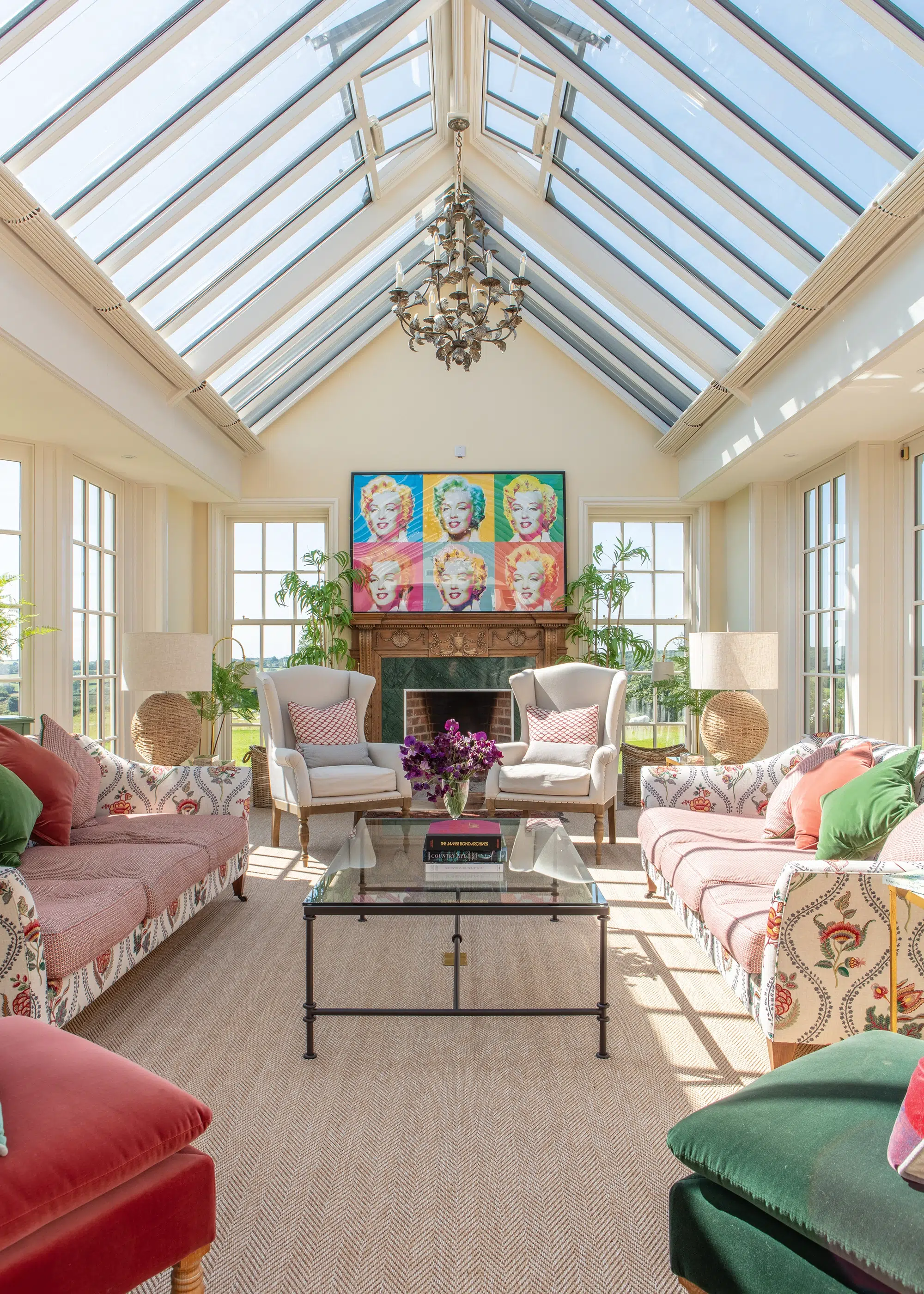
The owners of this home were looking to make the most of their scenic countryside surroundings, while also creating access to a new outdoor seating area. They opted for a bespoke scheme designed by Vale Garden Houses, which features an impressive floor-to-ceiling bay window overlooking the surrounding fields
From a planning point of view, there’s no real difference between building a conservatory and a single-storey extension of the same size. “The local planning authorities are generally only interested in the proposed external dimensions of the build, not the materials or design,” says Martin Gaine, Build It’s planning expert.
The post Extension or Conservatory – What’s the Difference & Which is Right for You? appeared first on Build It.