
Heat pumps are becoming an increasingly popular low-carbon option for space heating and hot water in the UK. More than 61,000 MCS-certified heat pumps were installed in 2025, compared to approx 11,000 in 2015 – an increase of over 450% over the decade. The government’s support for heat pumps has helped make adoption and installation
The post Complete Heat Pump Guide: What Are Heat Pumps & How Do They Work? appeared first on Build It.
Heat pumps are becoming an increasingly popular low-carbon option for space heating and hot water in the UK. More than 61,000 MCS-certified heat pumps were installed in 2025, compared to approx 11,000 in 2015 – an increase of over 450% over the decade.
The government’s support for heat pumps has helped make adoption and installation easier and more affordable for many. The Boiler Upgrade Scheme (BUS) currently offers grants of up to £7,500 towards eligible air source and ground source heat pumps in England and Wales, while the government’s wider Warm Homes Plan will further push green technology with continued funding. This feeds into the de-carbonisation of the UK’s energy system, with electric heating solutions becoming the standard for new builds and retrofits under the Future Homes Standard (FHS).
Gas boilers will not meet the Future Homes Standard, meaning new homes are now being designed around low-carbon, energy-efficient tech, such as heat pumps, from the outset.
Retrofitting a heat pump poses a different set of considerations, as installation will likely involve assessing and improving the home’s insulation and airtightness, upgrading radiators and potentially installing underfloor heating. Self builds can be designed around the heat pump from the beginning, allowing the building fabric, heat emitters and heating system to work together efficiently.
To help you understand what a heat pump is and how this low-carbon tech works, here we are breaking down the different types of heat pump available, what they cost, how efficient they are and the main factors that you need to consider when choosing and installing one.
| Helpful summary This article looks at the different types of heat pump and how they work. It outlines the main benefits and costs associated with heat pump installations in the UK and what it’s like to live alongside heat pump technology. |
Jump to
- What is a heat pump?
- How do heat pumps work?
- The different types of heat pump
- Understanding heat pump efficiency
- Heat emitters
- Installation costs
- Running costs
- Environmental benefits
- Living with a heat pump
- Maintenance considerations
- FAQs
What is a heat pump?
- Heat pumps are a low-carbon central heating option suitable for most types of home.
- They are designed to generate energy from the ground, air or water and convert it into usable, higher-temperature heat. This warmth is then be pushed into your home’s living environment and used for space and water heating.
- A heat pump produces more energy than it needs to run. This is what makes heat pumps an efficient, attractive option for homeowners.
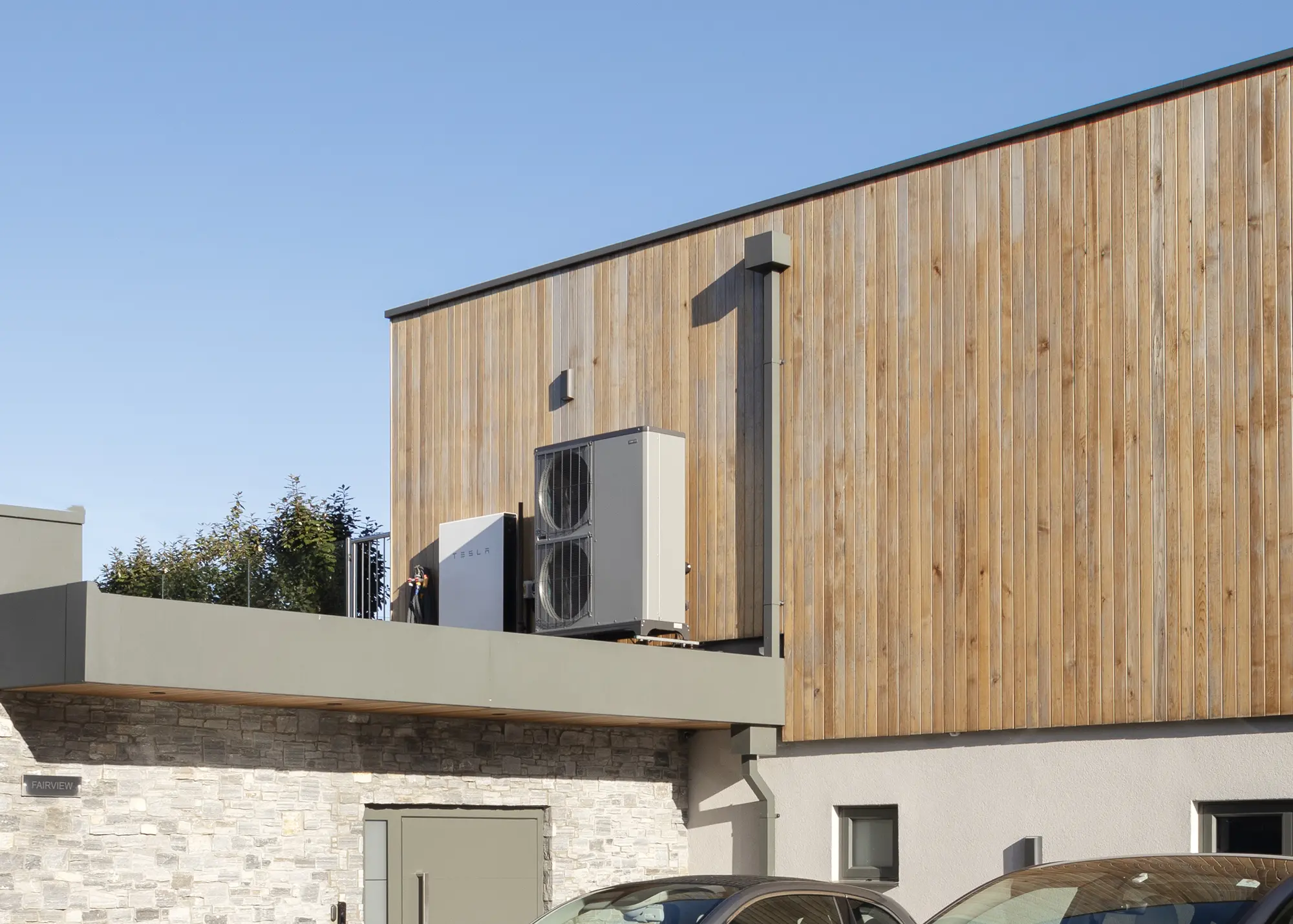
Energy efficiency was important to Adrian Evans, who prioritised a sustainable heating setup powered by renewables when building his ICF home on the coast. The highly-insulated home is warmed by underfloor heating that’s fed by an air source heat pump on the flat roof. To keep the interiors fresh, a mechanical ventilation with heat recovery (MVHR) system circulates fresh air and expels the stale air without losing heat. Photo: Simon Burt
How do heat pumps work?
Heat pumps work on the same principle as a refrigerator, but in reverse. Heat energy is collected from the source (ground, air or water) in a collector fluid known as a refrigerant. It’s then passed into the heat pump’s compressor, which pressurises the fluid into a gas and, in doing so, increases its temperature.
This gas then passes through a heat exchanger, which extracts the warmth for use in your home’s central heating and hot water system.
For each unit of power used by your heat pump, you get more than one unit of heat output. Typically, you can expect to gain 2-8 or more kilowatts of heat for every 1 kilowatt of electricity consumed.
The ratio of heat energy produced versus electrical energy consumed is known as the Coefficient of Performance (COP). Jump down to heat pump efficiency explained.
You need electricity to run a heat pump. So, while a heat pump will make use of renewable heat and should be very low-carbon in use, it’s not a completely carbon free system.
The post Complete Heat Pump Guide: What Are Heat Pumps & How Do They Work? appeared first on Build It.