E44 Laneway House / Imu Chan Architecture
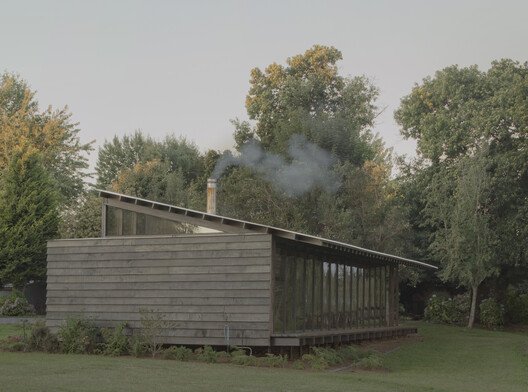
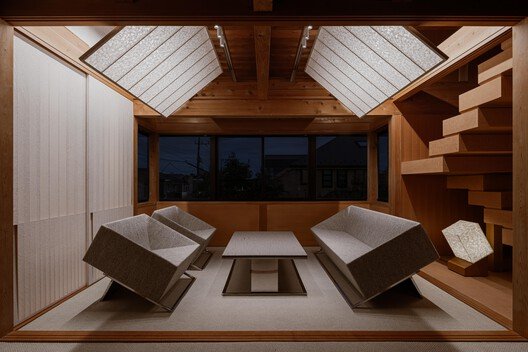
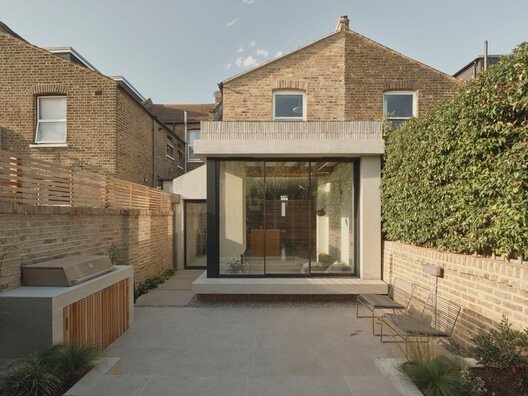
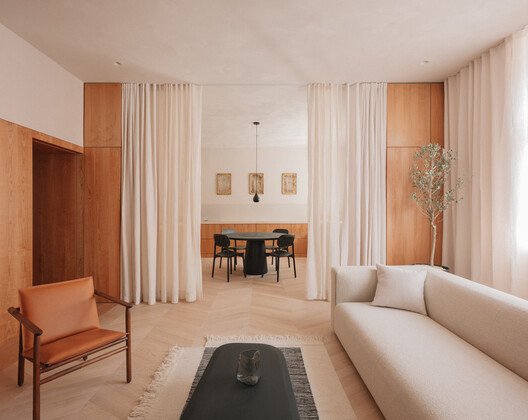
E44 Laneway House is the first permanent home for a young couple and their cat. Within 700 square feet (65 square meters), the project responds to the habits and nuances of both human and feline occupants.

E44 Laneway House is the first permanent home for a young couple and their cat. Within 700 square feet (65 square meters), the project responds to the habits and nuances of both human and feline occupants.

The House of Childhood arises from the understanding that architecture can accompany the growth and natural transformations of a family over time.

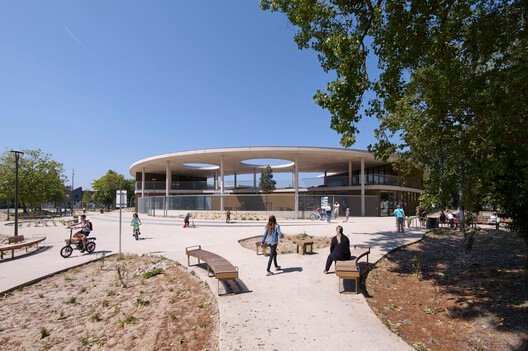
“Casco Parque Mexico” is a clubhouse for a housing cluster located in one of the most important, and fastest-growing residential areas in Puebla. The building was projected with two main objectives: to function as a coexistence and leisure center for inhabitants and visitors of all ages and serve as the archetype for future residences within the cluster.

The Australian War Memorial New Entrance redefines arrival at one of the nation’s most significant cultural institutions, shaping a welcoming, inclusive, and deeply reflective threshold that honours remembrance while guiding contemporary public experience.

co.arch’s project (Andrea Pezzoli and Giulia Urciuoli) in Cervinia is set within the Giomein complex, designed by Mario Galvagni and completed in 1972 on the homonymous promontory, overlooking the Breuil basin and the profile of the Cervino. Conceived during the peak expansion of Alpine tourism—new ski runs, cableways, infrastructure, and holiday residences—Giomein interprets the mountain not as scenery but as a morphological and perceptual system against which architecture chooses to measure itself.

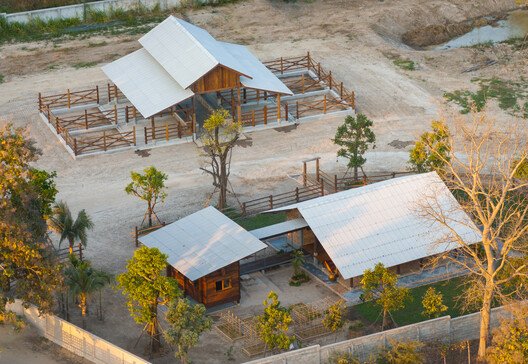
The engineering school lies on the Bouloie-Temis campus in Besançon, France, in parallel to the road that runs up its biggest slope. The positioning of the spaces built creates the major advantage of being absorbed by a small listed wood, which forges a close relationship between the rooms and the trees, which are very near to the elevations.

Located in Guanacaste, Costa Rica, Casa Seis Patios is a single-family residence designed for an art lover seeking a home intimately connected to the natural surroundings. The project is organized around six patios: strategic voids that articulate the space, allow for the entry of light and cross ventilation, and dissolve the boundaries between interior and exterior through the presence of vegetation in all environments. At the heart of the volume is the main patio, where the house opens completely to a central pool, making this space a gathering point.

Inspired by specialty coffee and the love for design, the place redefines the conventional design studio and is a physical representation or showroom where you can visualize the skills of the studio and the new design trends, promoting the creation of spaces that stimulate the senses and gradually enrich the local community.

S House is a small, quiet house that asks a simple question: how might we live more lightly, even within the density of the city? Set on a narrow plot in Tan Thuáºn Tây, District 7, the house draws its spirit from rural life in the Mekong Delta — a way of living shaped by weather, plants, open air, and daily rituals rather than walls. Though surrounded by urban streets, S House feels closer to an eco-lodge than a city dwelling: a personal rural refuge with gentle touches of modernity.

House C transforms a minimal 32 m² apartment into a continuous, luminous interior landscape deeply connected to the sea. What was once a fragmented and irregular dwelling is reinterpreted as a single, legible space, freed from unnecessary partitions in order to allow a clear and uninterrupted reading of the whole. Only the bathroom remains enclosed, conceived as an autonomous cabin that preserves intimacy while reinforcing the perception of the apartment as a single room.