Blog

Casa Ohana / Vertebral

Casa Ohana is a secluded jungle residence in Puerto Escondido that balances openness and refuge through a series of independent volumes shaped by the surrounding landscape.

Read More »

Forest House / Studio Onu

DOM LAS (‘Forest House’ in Polish) is a project born from a specific situation. 25 years ago, the client bought an empty field near his hometown with the vision to create something for the future. Through care and attention, the 7 hectares have been tended to, trees planted, and grasslands shaped. The careful process of silviculture with selective weeding and thinning of young pine and birch tree saplings has turned this disused field into an attractive and varied landscape, reflecting the native flora of the region.

Read More »

The Poet’s House / Next Office–Alireza Taghaboni

The Poet’s House by Next Office is the restoration and adaptive reuse of the former home of Iranian poet and dissident Ahmad Shamlou into a cultural center in downtown Tehran. While preserving the original brick façade and structural shell, the project introduces a spatial intervention along a second-floor wall bearing a handwritten poem by Shamlou. This element was extended into a conceptual and semi-structural backbone—transformed into a three-dimensional promenade that opens the house toward the city. Through this approach, the formerly private courtyard becomes a public open space that invites visitors into the life, thoughts, and legacy of the poet.

Read More »

The Wine House / NORM Architects

Set within the gentle contours of the Swedish landscape, the transformation of Vinhuset marks the next chapter in our ongoing collaboration with Ästad VingaÌŠrd – an estate where nature, craft, and hospitality intertwine. Following the creation of Restaurant ÄNG and the lakeside retreat of Sjöparken, this new project extends the dialogue between architecture and terrain, deepening the sensorial experience that has come to define the vineyard’s growing constellation of spaces and functions.

Read More »

Non-Commercial Cultural Hub / IPA Filip Kozarski

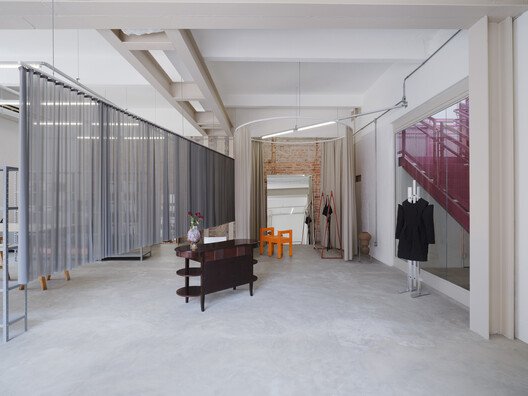
Grid Arthub is located in Hall 31B, a late 19th-century industrial building in the GdaÅ„sk Shipyard, a site historically associated with both shipbuilding and the Solidarity movement. The project began with an intention to preserve the hall’s layered identity while introducing a flexible contemporary program that could support the growing creative sector in GdaÅ„sk. The inspiration came from the building’s long and changing history. Over time, it served as a wood-drying plant, mess hall, boxing gym, and office space. Rather than erasing these traces, the design sought to work with them, maintaining a sense of continuity while opening the interior to new uses.

Read More »

Catimbau House / AzulPitanga

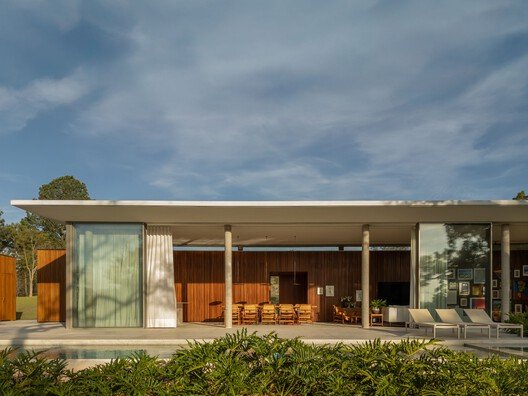
Located in the municipality of Buíque, in the interior of Pernambuco, Casa Catimbau is situated within the Catimbau National Park, the second largest archaeological conservation unit in Brazil, and one of the most representative areas of the caatinga.

Read More »

77 Washington Workspace / Worrell Yeung Architecture

The project consists of the renovation and redesign of 77 Washington, a six-story, 38,000 square-foot, former masonry factory built in the 1920s, as well as a cluster of four other historic buildings adjacent to the property. Located on the corner of Washington Avenue and Park Avenue near the Brooklyn Navy Yard, this ambitious adaptive reuse project draws from the neighborhood’s rich history and design typologies abundant in early 20th-century New York warehouses.

Read More »

House in Yokosuka 2nd / RID Co., Ltd.

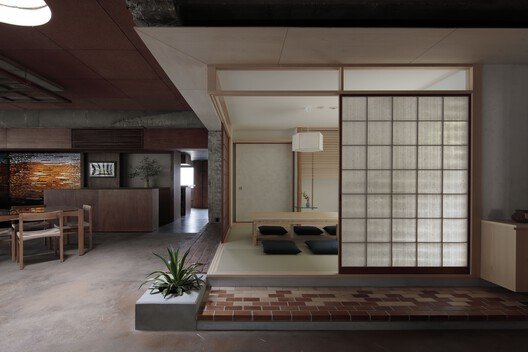
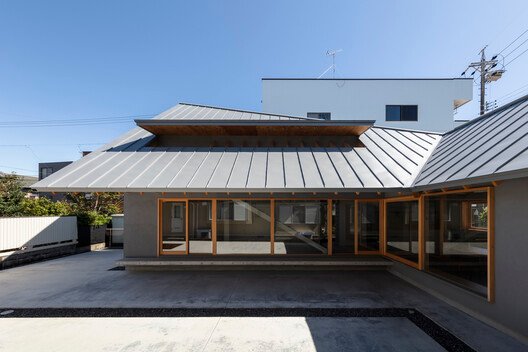
An architectural design for a family that lives in the city. Located along the sea, the forest sways under the offshore wind. The beach is adjacent to the site, and becomes crowded on weekends with local people who enjoy marine activities and sunsets.

Read More »

Soberrijk House / Marge architecten

High grasses, two shrubs, and an oak. Somewhere in the 1970s, a row of dilapidated workers’ houses had to be demolished here. Nothing remained of it, and nothing was put in its place. The current green seems to have originated accidentally. An accidental green area due to the absence of buildings, not laid out, not functional. Recently, the city decided to divide the park into parts again, and to complete the building block again.

Read More »