Kiln Tower for the Brickworks Museum / Boltshauser Architekten

kusterfrey boha turm cham 0021 0318 dzPOCT

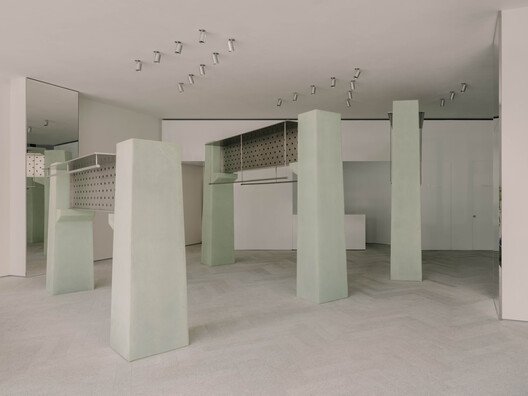
The brickworks, that is run today by the Brickworks Museum, is the only intact surviving handmade brickworks in German-speaking Switzerland. The listed ensemble consists of a timber brick-drying shed, a kiln, that may no longer be operated, the biotope of the historical clay pit, a residential building with gardens, and a museum building that replaces a burned-down barn. In 2017 students of the guest professorship at the TU Munich worked on the task of designing a new kiln tower on the site. The prestressed earth-and-timber structure is based directly on the mock-up carried out at the Sitterwerk and is the world’s first prestressed earth building.

VEGA House / Archirie

vega house archirie 17 T7YJG5

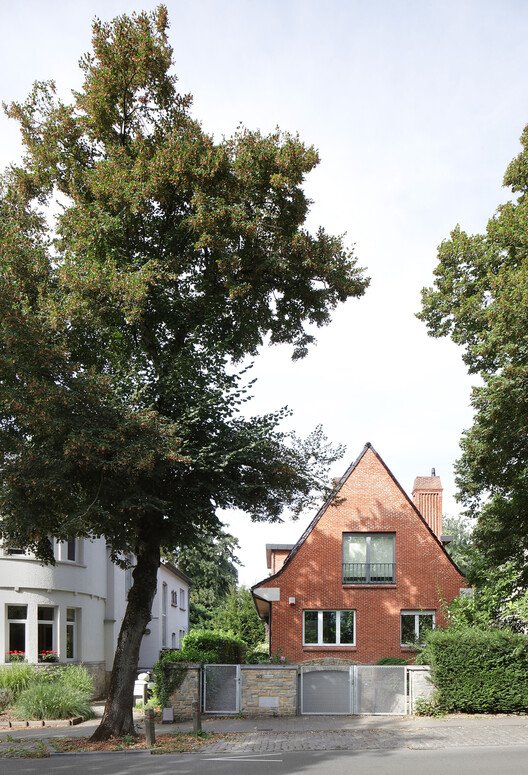
This building was designed as a home for a couple and their two children. The site is located on a quiet residential corner surrounded by an apartment complex and a golf course, with three sides facing roads except for the south. Currently, the area is a mix of vacant lots and houses, but it will gradually be filled with houses. The camping caravan on the vacant lot evokes the image of a family who enjoys nature and camping. I envisioned a house that would embody such a warm and joyful family life.

Laoyuting Pavilion / Atelier Deshaus

laoyuting pavilion atelier deshaus 14 EYp6TF

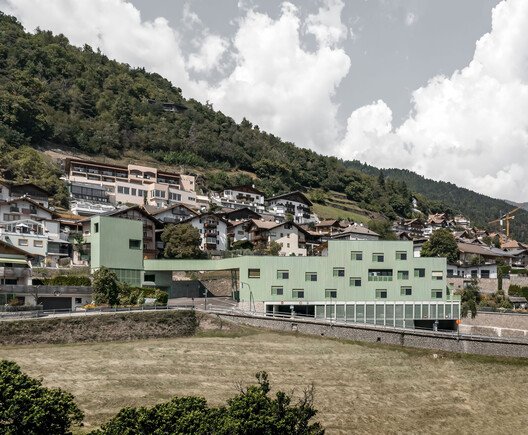
Laoyuting Pavilion is one of the invited projects of the 2024 Dianchi Art Season: “Home and Future”. It is located on the southern side of the Water-Forest Art Zone in the Laoyu River Wetland Park at Dianchi Lake. After its completion, it first served as the entrance to the Dianchi Art Festival, and after the festival, the pavilion was permanently preserved as a spatial hint for entering the wetland park, as well as a resting place for visitors. This wetland, filled with groves of bald cypress along the edge of Dianchi Lake, is in fact part of the city’s water-purification infrastructure—the final stage of natural filtration before water enters the lake. It is home to many small fish, and city dwellers often come here during leisure time to catch fish, hence the name Laoyu River Wetland. As a pavilion where people rest while fishing, it naturally came to be known as the Laoyuting Pavilion.

Quiet Hope: Frank Gehry’s Maggie’s Centre Hong Kong

quiet hope frank gehrys maggies centre hong kong 15 QdK3uE

Earlier this month, news of Frank Gehry’s passing prompted an outpouring of tributes to the architect behind flamboyant museums, concert halls, and sinuous residential complexes. Rather than revisit that well-charted terrain, it is worth pausing on a more contemplative work in his oeuvre: Maggie’s Cancer Caring Centre in Hong Kong. Quiet, optimistic, and calibrated for everyday resilience, the building reflects multiple registers of Gehry’s intent: a commitment to positivity and survival—and, more personally, an architect’s own reckoning with loss and end-of-life care.

Phare Ylliam Lighthouse / BUREAU

BUREAU PHARE YLLIAM final DylanPerrenoud 13 n6a6Xl

Few programmes offer such strong and evocative poetic substance as a lighthouse. The lighthouse is a place and an object that inspires reverie, the imagination of distant places, but also of return, of a landmark, a symbol of safety after stormy voyages. The lighthouse is the very embodiment of what it carries, of why it exists: to carry and bring light.

AquaPraça Floating Plaza / Carlo Ratti Associati + Höweler + Yoon Architecture

aquapraca floating plaza carlo ratti associati plus howeler plus yoon architecture 1 MXtM47

AquaPraça, the floating cultural plaza designed by CRA-Carlo Ratti Associati and Höweler + Yoon, becomes one of the landmarks of the UN Climate Change Conference COP30 in Belém, Brazil. Following its unveiling in Venice in September during the Biennale Architettura 2025 in partnership with Italy’s Ministry of Foreign Affairs and International Cooperation, Italy’s Ministry of Environment and Energy Security, and COP30 Presidency, AquaPraça now serves as an integral part of the Italian Pavilion at COP30, the UN Climate Change Conference. AquaPraça was made possible through a unique international coalition, including the Italian Agency for Development and Cooperation, CIHEAM Bari, and the World Bank Group’s Connect4Climate program, and with the support of BF International – Member of BF S.p.A. Group (as AquaPraça COP30 Naming Partner), Bloomberg Philanthropies, Costa Crociere, ENEL, and Gruppo Ferrovie dello Stato Italiane. AquaPraça was constructed by an Italian leading advanced steel construction Company, Cimolai. After COP30, Aquapraca will be donated by Italy to Brazil to become a community space for promoting social engagement on climate, cultural strategy, and creative industries in partnership with the State of Parà of Brazil.

Reserve House / herchell arquitectos

reservareal 1 tWpXzR

Designing a residence in the heart of one of the busiest neighborhoods in the Metropolitan Zone of Guadalajara was quite a challenge, especially considering the proximity of the condominium’s clubhouse and the entrance booth. The family sought an intimate and private home, and this is how we achieved Casa EV, a unique and cozy space.

Backyard Community Club / DeRoche Projects

backyard community club deroche projects 9 YPS3nr

In Accra, where public investment in recreational space is limited and green areas increasingly scarce, the Backyard Community Club proposes a new model for shared civic life: a community sports facility centered on a tennis court, demonstrating how design can deliver inclusive, sustainable, and socially transformative environments. Designed by DeRoche Projects, it is Ghana’s first project using a precast rammed earth system – an innovative method pioneered by the studio that reimagines an ancestral material for contemporary, scalable use. At once a local landmark and a replicable prototype, Backyard exemplifies how design can respond to urgent questions of civic quality, environmental stewardship, and cultural identity.

Layers of Meaning: Exploring the Depth of Architectural Envelopes

from thin veils to thick barriers exploring different widths in architectural envelopes 18 gmHo8I

Architecture has always played a key role in providing shelter and protection for human beings. In prehistoric times, we sought refuge in caves, taking advantage of rock structures for protection against the natural elements and predators. Over time, shelters began to be made from materials found in nature, such as branches, leaves, and animal skins, evolving into more permanent and complex homes, with walls made of stone, bricks or wood, roofs to protect against rain and sun, and doors to control access. As we developed more advanced building skills, we used materials such as wood, stone, and clay and architecture evolved significantly, with the construction of temples, palaces, and fortifications that provided not only shelter but also symbolized power, status, and cultural identity. Even so, our buildings can continue to be seen as shells that protect us from the outside world. 

House HSBW / Simon Kochhan + Florian Baller

HSBW Out KimFohmann 45 6 4UiFcl

Living at the Threshold of Cemetery and Railway Line – House HSBW is located in Heidelberg’s Weststadt district, at the threshold between the historic Bergfriedhof cemetery and the adjacent railway line. On a wedge-shaped site, the building develops a distinct, site-specific form that balances urban presence with a sense of privacy.