Peacock Hail Cafe / movs studio
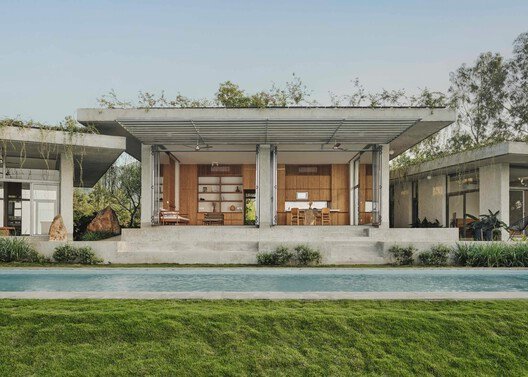
Set against a dramatic natural backdrop, this Peacock café in Ha’il redefines contemporary Arabian hospitality by weaving handcrafted interiors around a courtyard carved directly into a real rock formation.

Set against a dramatic natural backdrop, this Peacock café in Ha’il redefines contemporary Arabian hospitality by weaving handcrafted interiors around a courtyard carved directly into a real rock formation.

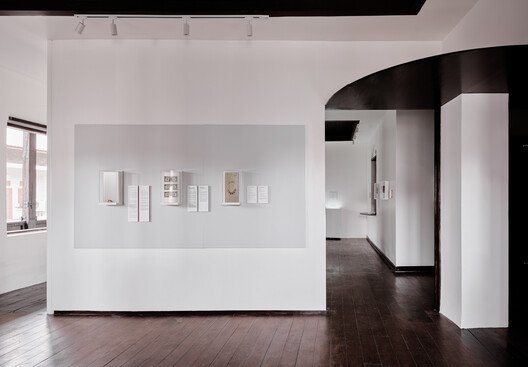
The Loop is an experience-led space for The Wardrobe Company, a brand built around flexibility, customisation, dialogue, and co-creation, where kitchens, wardrobes, and objects could be explored as part of a narrative rather than a catalogue. The intent was to encourage discovery through interaction and conversation, allowing customers to immerse themselves in the brand ethos and make informed choices at their own pace.

It was July 1969, and people on planet Earth were about to witness a historical moment for humanity: the first time a human being stepped on the surface of the Moon aboard the Apollo 11 mission. After this event, NASA landed five more times on the lunar surface, with the last one being Apollo 17 in 1972. Since then, humans have not attempted to return to the Moon until this year, 2026, when they will launch the Orion spacecraft as part of the Artemis II Mission. Planned to set off between February and April 2026, Orion will not yet land people on the Moon, instead it will make a flyby, in order to allow testing of the software and systems. This will set the base for an actual human landing on the Moon’s South Pole as part of Artemis III sometime between 2027 and 2028, eventually opening a brand new era in Extraterrestrial architectural design.

On the banks of the river in Sainte-Anne-de-Bellevue, Montreal, Mise à Jour Studio undertook thecomprehensive transformation of a heritage home. Formerly divided between a residence and a medical office occupying nearly half of the ground floor, the intervention opens up the spaces and enhances visual connections to the river, while bringing new light into the heart of the house.

Roots and Context. The “Mirador School La Jalquilla” project is located in San Ignacio, in the Ceja de Selva region, on the border with Ecuador, in Peru. This region, with an economy centered on coffee cultivation, faces significant challenges due to its isolation and resource scarcity. The project aims to revitalize local knowledge and traditions, integrating the rich biodiversity and Andean and Amazonian cultures into its proposal. It benefits more than 110 primary and secondary students, in addition to providing sports and public infrastructure for the community. The school stands as a comprehensive path that promotes educational development, fostering well-being, and strengthening ties with the natural and cultural environment.

Cabin Fever is an international summer school and festival launched by the Hungarian architecture studio Hello Wood, known for its design-build approach and community-focused, sustainable projects. Since its founding in 2010, Hello Wood has become a global platform merging hands-on education with socially engaged architecture. The 2025 edition, powered by VELUX, explored how light and space shape human experience — placing presence, intimacy, and connection at the centre of architecture. This dialogue with VELUX reflects a shared conviction: that the future of building lies in responsibility — in creating spaces with care, with awareness, and with light — offering meaningful alternatives in an overstimulated world. 2025 Concept, Location, Participants. From 23–31 July 2025, the festival took place in ÄŒeská Kamenice, Czech Republic, on the grounds of a former textile factory and wartime labour camp — a place that embodies both the weight of memory and the potential for transformation. Under the theme “Quality Time – Connection to Each Other”, participants were invited to explore how design can strengthen our relationships with each other and with the places we inhabit.

The LUC Lifestyle is envisioned as a contemporary destination that seamlessly blends food and beverages, fashion, fragrance, aesthetic dental care, and traditional Balinese craftsmanship into a single elevated experience. Its core design idea is to create a vibrant hub that reflects the dynamic, international energy of Canggu while honoring the island’s cultural identity. This vision guided not only the lifestyle concept but also the architectural language that defines the entire development.

Bosrijk is a residential area west of the city of Eindhoven, located on a former military defense site. Housing in Bosrijk is designed as ‘sculptures in a garden’. For a small plot next to an existing natural rainwater infiltration facility, the office designed a sculpture with five single-family homes, in which the idea of ‘living in a forest landscape’ was the leitmotif.

Shou Sugi Ban is a traditional Japanese technique for wood preservation that involves charring the surface of timber to create a protective layer. While its origins are rooted in practical durability, the method has been widely adapted into the modern built environment and shapes a unique and distinctive aesthetic. It is a material of contradiction: it remains bold in its visual language due to its dark tones, yet it simultaneously borrows from and complements its natural surroundings, allowing houses to settle quietly into their sites.

One of the many misconceptions that has preoccupied the world of architecture in recent decades is that architecture’s noble existence occurs only in the built world.