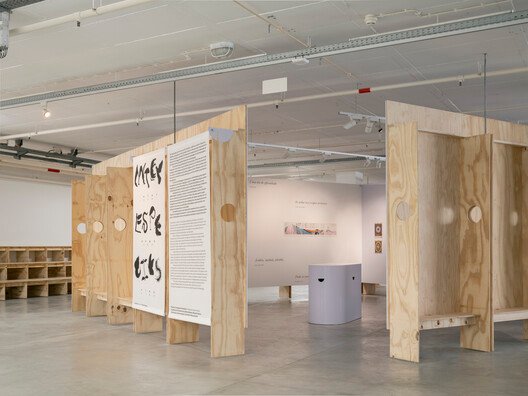
Garage Encounters / BUREAU (Daniel Zamarbide, Carine Pimenta, Galliane Zamarbide)
One of the many misconceptions that has preoccupied the world of architecture in recent decades is that architecture’s noble existence occurs only in the built world.

One of the many misconceptions that has preoccupied the world of architecture in recent decades is that architecture’s noble existence occurs only in the built world.
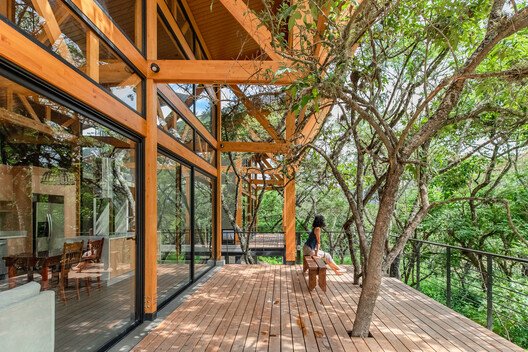
Leaving behind the urban fervor of Quito requires a slow decantation, a change of pace where asphalt finally yields to the vegetation of the dry steppe. In the Guayllabamba valley, architecture does not seek to conquer the land but to coexist with it; the House in the Forest arises from this premise, not as an imposed structure, but as a device for inhabiting time. The project is best understood under the logic of the “nest”: a structure that weaves intergenerational memories and, instead of settling heavily, decides to levitate over a landscape that it barely disturbs.
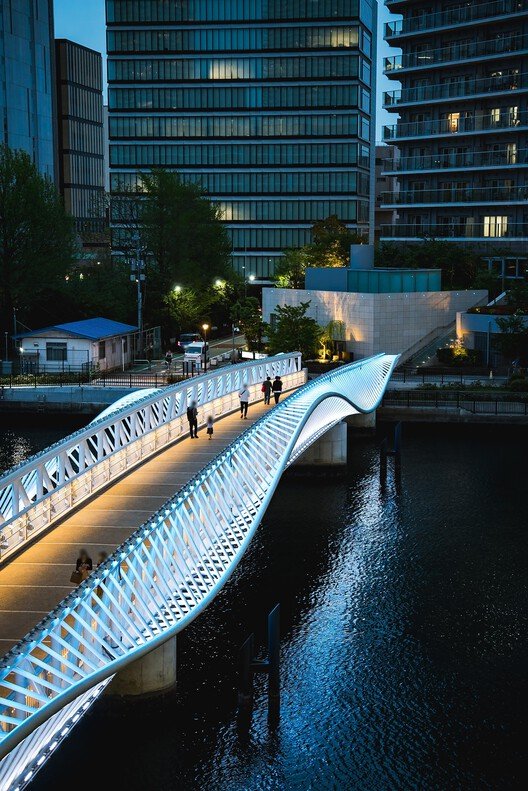
The Reimei Kobashi footbridge, which connects Kachidoki Station and Harumi 3-chome in Tokyo’s waterfront district, opened to the public on March 25, 2024. This footbridge crosses the Asashio Canal to Grand Marina Tokyo, with a soft arching design reminiscent of gentle waves rolling over the water’s surface.
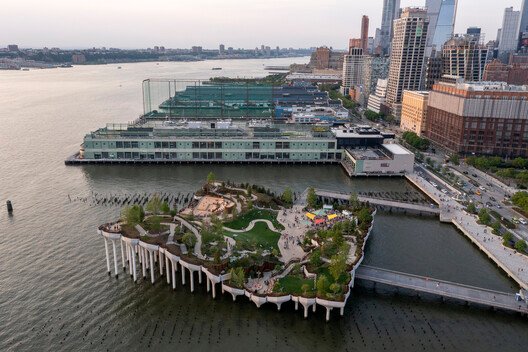
Coastal development in major cities has long been a terrain of opportunity and contention—shaped at once by the pursuit of capital (premium views, scarce land, and the promise of reclamation), by civic demands for public access and collective waterfront life, and by contemporary aspirations for sustainability and place-defining urban identity. Precisely because these agendas rarely align, extracting the full potential of waterfront sites is never straightforward.
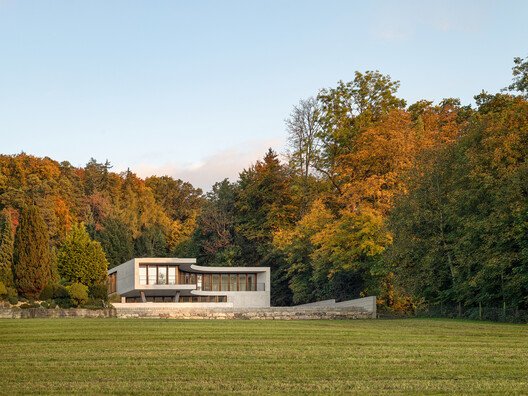
A House shaped and powered by nature – Winkelhaus is the inaugural project of estudio kmmk in Switzerland. The single-family home was shaped by its stunning natural surroundings and by the family’s vision of having something specific to their needs. The house forms a harmonious relationship with the adjacent forest and expansive valley.
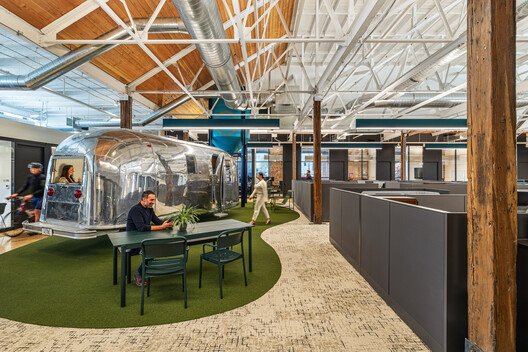
Brown & Crouppen’s new headquarters transforms a century-old stove factory into a workplace that competes with the comfort of home while honoring St. Louis’ industrial heritage.
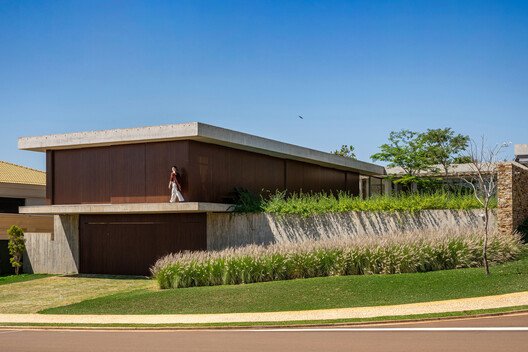
The house reflects our proposal for contemporary architecture focused on the integration between interior and exterior, valuing pure proportions, natural materials, lighting, and cross ventilation. The office values formal simplicity and the choice of materials that bring comfort and warmth to the residents. From the beginning of the project, we have considered its materiality and volumetry, the voids and solids, the light and the shadow.
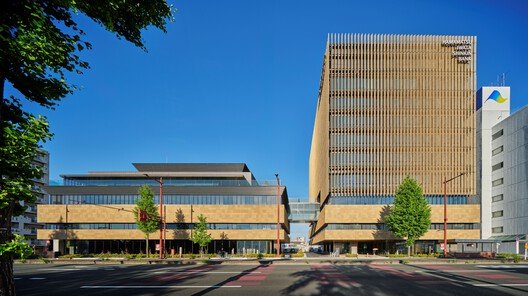
Fostering a sense of family and accelerating decision-making through a robust workplace – This redevelopment plan for two buildings – the head office and main branch – spans two sites facing the town’s symbolic Hamamatsu Castle. It was brought to fruition by Shinkin Bank (credit union) with deep roots in this historic castle town.
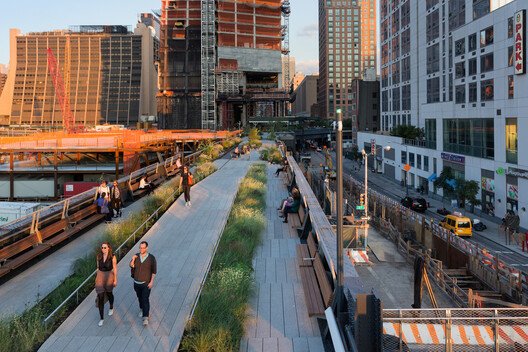
Architectural heritage is often described as what survives time. Yet survival does not explain why certain buildings are preserved while others disappear. Many works now protected as cultural heritage were once criticized, contested, or openly rejected; they were accused of being socially misguided, materially flawed, or symbolically excessive. Over time, however, these same shortcomings have become central to their meaning as heritage emerges as a slow and unstable process of interpretation.
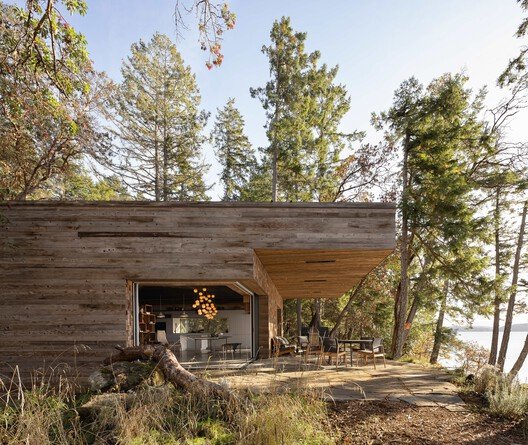
91.0 is a house on a forested waterfront lot in the Gulf Island archipelago of the Canadian Pacific Northwest.