
Are you considering replacing your existing boiler with an efficient heat pump? For any homeowner looking at making energy efficiency improvements, heat pumps are now a firm contender in the list of options. Two of the most common questions about this tech are “how much does it cost to install a heat pump?” and “what savings can
The post Retrofitting a Heat Pump – Your Guide to The Benefits Costs & Installation appeared first on Build It.
Are you considering replacing your existing boiler with an efficient heat pump? For any homeowner looking at making energy efficiency improvements, heat pumps are now a firm contender in the list of options. Two of the most common questions about this tech are “how much does it cost to install a heat pump?” and “what savings can I expect?” These queries may seem simple, but in fact they’re complex and highly nuanced.
If you’re self building, everything will be brand new – so, with careful planning, there shouldn’t be any unexpected surprises. In a home renovation it’s not that simple, as there can be many hidden issues. The decision on whether to replace a boiler with a heat pump (HP) in an old house therefore depends on several factors, including:
- The nature and condition of the original building fabric.
- Whether the property holds any heritage status and potential impact on this.
- The existing heating distribution system.
- How much it costs to retrofit a heat pump system.
- How much you can save by replacing your boiler with a heat pump.
In this article, we take a look at each of these considerations in turn, so that those undertaking or considering a retrofit can make an informed decision about whether or not to replace a boiler with a low-carbon heat pump.
Jump to retrofitting a heat pump FAQs answered
Is your house suitable for a heat pump?
Heat pumps work best in well-insulated and airtight properties. In other words, they don’t like being overtaxed and are most efficient when running steadily at low level. This requires a building that’s good at retaining heat.
Old houses rarely do this well, for two reasons. Firstly, they were built before we understood the principles of insulation. And secondly, they have numerous natural air leakage pathways. This includes gaps through suspended floors, through junctions with walls, around window and door frames, services penetrations, and any open chimneys.
Do you need to upgrade your home’s insulation levels?
Most will need to upgrade their house’s insulation when retrofitting a heat pump. If you do this, it’s important to take a whole house approach. Vulnerable areas of heat leakage must be addressed in order to prevent cold spots forming via thermal bridging, as this could cause damp issues in your home.
If you have a pitched roof with a flat ceiling beneath, it will be easy to fit or top-up loft insulation. Original windows can be upgraded with secondary glazing, and the frames draughtproofed. You can also insulate suspended floor structures, although this work can be disruptive.
Cost-effective airtightness measures include closing chimneys or using good quality underlays on suspended floors. It’s essential, though, to ensure occupants (and the building) still have access to plenty of fresh air. So, check ventilation rates and look to at least meet the Building Regulations.
This level of retrofit may be sufficient to make a building heat pump-ready – ie the building will cost no more to heat with a heat pump than it would have done with a boiler (prior to the retrofit). But of course, there’s a financial and environmental cost to doing this work. You might decide it’s better to stick with the boiler after the fabric improvements are made, as your bills should already be lower.

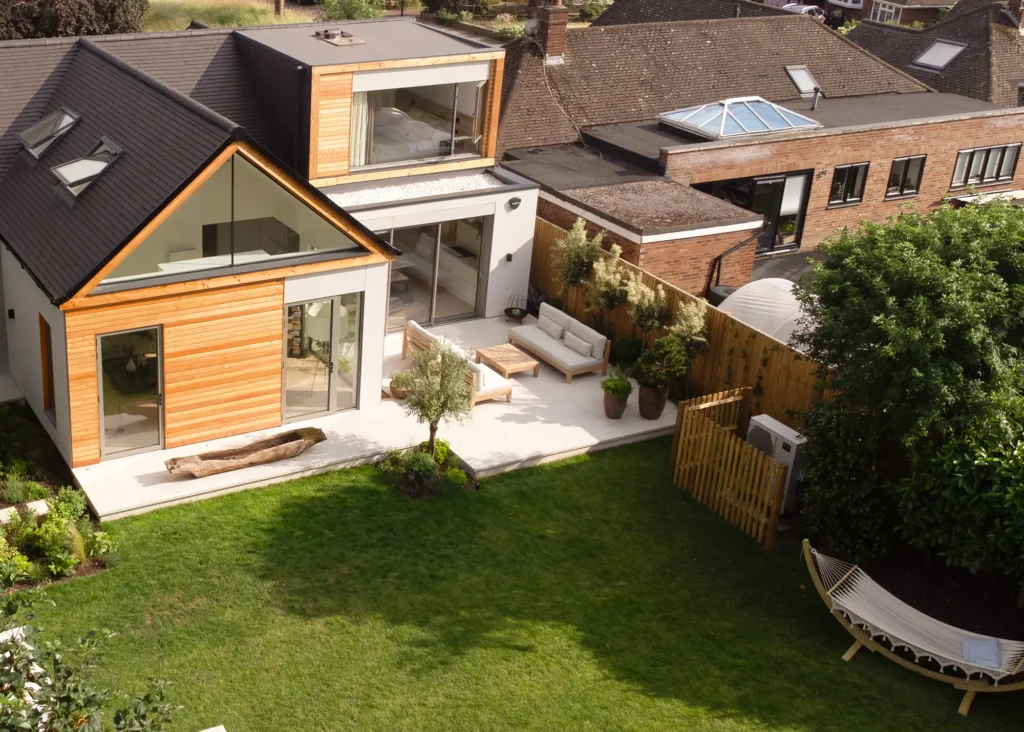
This 1960s bungalow has been extended and renovated, with a design by Sophie Bates Architects, to create an open-plan, efficient family home. The property has also been upgraded with internal floor and wall insulation, an air source heat pump and a mechanical ventilation and heat recovery (MVHR) system, ensuring a healthy living environment with low running costs all year round. The heat pump unit sits outside the house, in the garden behind a timber-walled shelter. Photo: Simon Kennedy
The post Retrofitting a Heat Pump – Your Guide to The Benefits Costs & Installation appeared first on Build It.