

Planning a home renovation, furnishing a new apartment, or just wondering how much it’ll cost to finally replace that worn-out sofa? Figuring out your total USA furniture cost can feel like hitting a moving target. Prices fluctuate wildly based on material, brand, location, and the current economic climate.
But don’t stress! You don’t have to rely on guesswork or hours of tedious browsing. The secret to smart budgeting is using the right online furniture cost estimators. We’ve pulled together the best digital tools that provide realistic pricing, helping you secure your dream home without breaking the bank.
Why Furniture Pricing is So Hard to Pin Down
Before diving into the tools, it’s helpful to understand the three main factors that make furniture cost estimation tricky:
- Materials and Quality: A solid wood, handcrafted dresser will cost exponentially more than one made from engineered wood or particleboard. High-end fabrics, specialized leather, and sustainable sourcing all add to the bottom line.
- Supply Chain & Shipping: This is often the hidden killer. A piece of furniture might look affordable, but once you add delivery fees (especially for large, bulky items), the price can jump significantly. Location matters—shipping from a coastal port to a landlocked state is costly.
- Brand and Design: You’re not just buying a chair; you’re buying a brand. A unique, designer piece with limited availability demands a premium over mass-market, flat-pack items. Remember, a portion of the price pays for the research, development, and marketing of that specific design.
The Essential List of Online Furniture Cost Estimators
The best estimators aren’t just simple calculators; they’re data-driven tools that aggregate pricing from across the market to give you a genuine budget snapshot.
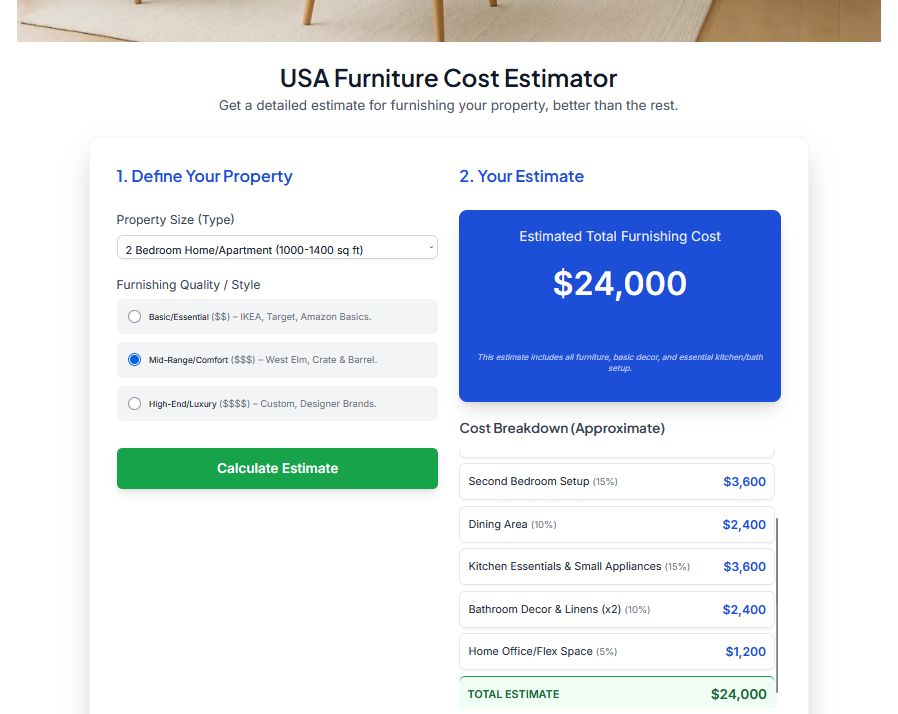
1. Real US Home: The Comprehensive Home Furniture Estimator
When you need a broad, reliable estimate for various home projects, including specific furniture items and entire room setups, Real US Home is a top-tier resource.
- What it does well: This tool is designed to give you realistic, localized cost data. It goes beyond simple product lists by often factoring in costs related to interior design, installation, or general room furnishing expenses. It’s particularly useful if you’re trying to budget for a large-scale project where furniture is just one component.
- Best for: Comprehensive room renovation budgets and getting a baseline for high-ticket items like kitchen cabinetry, flooring, or full bedroom sets.
2. Furnishr Furnishing Cost Calculator
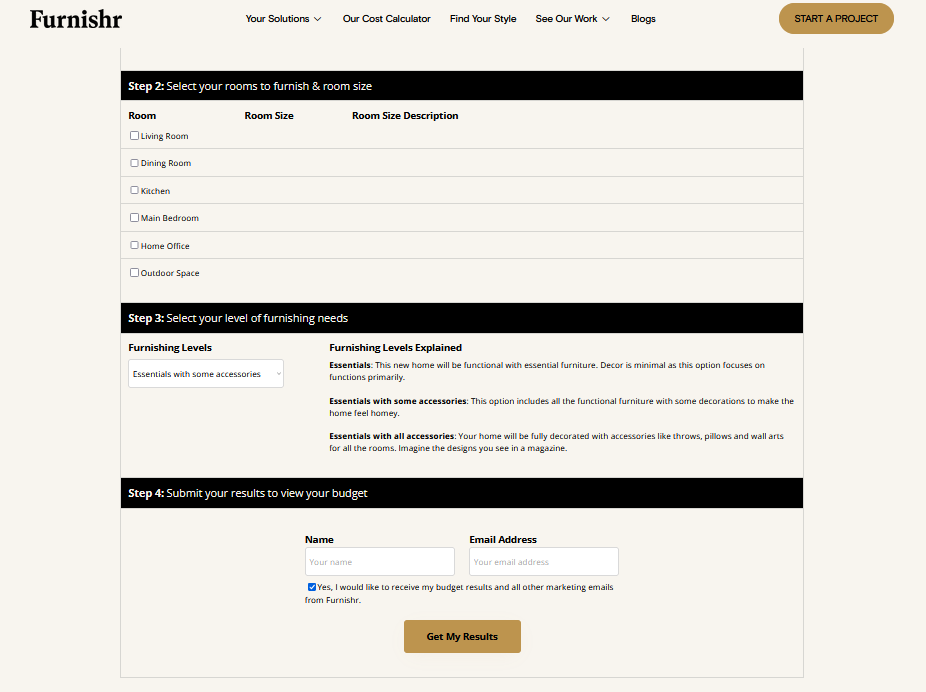
The Furnishr calculator is less of a general market estimator and more of a specialized budgeting tool for those considering a professional, hands-off furnishing service. It excels at delivering a project-based estimate rather than piece-by-piece retail pricing.
Users walk through a four-step process, defining the property type (from a studio up to six bedrooms), location (USA or Canada, with state/province selection), and which rooms need attention. The most unique and valuable step is selecting the “Furnishing Level”: Essentials, Essentials with some accessories, or Essentials with all accessories. This allows for a budget that factors in styling—from purely functional to magazine-ready.
While the tool requires you to submit your name and email to view the final budget result (a mild hurdle), it provides a highly personalized range based on scale and styling needs. It’s best used by property managers, investors, or busy professionals looking for a turnkey, full-service design solution, giving them a quick, tailored quote based on their specific furnishing ambitions.
3. Stylish Cost to Furnish a House Calculator
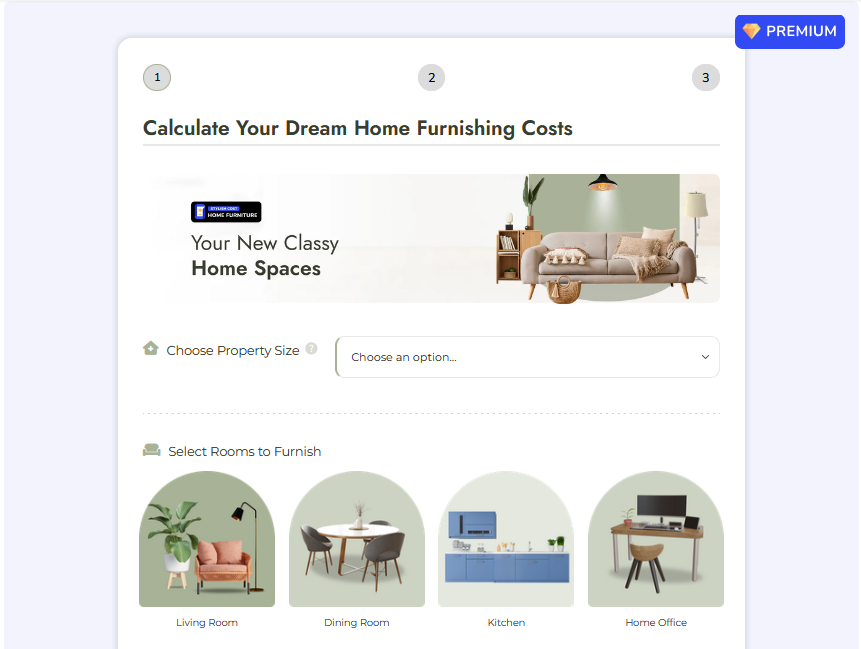
This tool acts as a rapid, multi-step project quote generator, rather than a general price list. It is highly effective for quantifying the scope of a large furnishing project.
The calculator quickly funnels the user’s needs through three key variables: property size (e.g., 1-5 bedrooms), room selection, and the critical quality tier (Basic, Standard, Premium). By focusing on these inputs, it delivers a precise, tailored estimate that accounts for both scale and material quality. It is an excellent lead-generation tool for the service running it, providing a high-quality initial budget projection that typically requires contact submission to view the final breakdown.
4. Retailer-Specific Budget Tools
While not third-party “estimators,” leveraging the interactive tools provided by major retailers is crucial for finalizing your budget breakdown. Many national chains offer design tools that allow you to virtually furnish a room and tally the immediate cost.
- IKEA’s Planning Tools: Perfect for budget and mass-market furniture. These planners let you place specific cabinets, closets, and storage systems into a virtual room, giving you the exact price instantly, including optional assembly services.
- Wayfair/Amazon Search Filters: Use these sites not just for buying, but for research. By filtering for specific materials (e.g., “solid wood king bed”) and sorting by price, you can quickly establish the high and low ends of the market for nearly any piece.
5. General Contractor & Design Calculators
If your new furniture is part of a larger project (like a home addition or a custom-built-in media center), you need an estimator that accounts for both materials and labor.
- HomeAdvisor/Angi Cost Guides: These platforms often include sections for things like “custom built-in shelving cost” or “designer consultation fees.” While they focus on service, the price points for designer furniture installation or custom work are highly relevant to your overall estimation.
- The “Cost Per Square Foot” Method: For high-end design, interior designers often estimate furniture spending based on a percentage of the home’s value or cost per square foot. While advanced, some specialized online calculators can help you determine if your furniture budget is proportionate to your home’s total value.
Pro Tips for a Furniture Budget
No online tool is perfect. To get the most accurate, semantically optimized estimate for your actual needs, follow these human-centric tips:
Always Factor in “The Hidden 20%”
The price tag is rarely the final cost. When using any estimator, manually add 15-20% to the estimated total for unexpected expenses:
- White-Glove Delivery: Standard curbside delivery is cheap. White-glove service (in-home placement and packaging removal) is often an extra $100-$300.
- Assembly: Even simple pieces take time. If you’re not handy, budget for an assembly service like TaskRabbit.
- Tax: Don’t forget state and local sales tax, which can be a hefty addition on expensive purchases.
Time Your Purchases Strategically
Estimators are based on current prices. If you can wait, your final cost will be lower:
- Holiday Sales: Target major three-day weekends (President’s Day, Memorial Day, Labor Day) for the deepest discounts on furniture.
- “New Year, New Inventory”: Many retailers clear out old inventory to make room for new designs in late winter (January/February), making this a great time to snag clearance deals.
Use the “Tear-Sheet” Method
For a truly accurate budget, create a digital folder of your desired items (your “tear-sheet”). Use the online estimators to set the budget category (e.g., “Dining Set: $2,000 – $3,000”) and then use the retailer-specific tools to find the exact pieces that fit that category. This blends the high-level cost estimation with real-world product availability.
FAQ About Furniture Budgeting
We get it—you have more questions than answers when facing a big home purchase. Here are the real talk answers to the most common queries we hear about furniture cost estimation.
1. What’s a realistic average cost for furnishing a one-bedroom apartment from scratch?
That depends entirely on your taste and priorities! But here’s a rough, human-friendly guide:
- Budget (IKEA/Wayfair basics): $3,000 to $5,000. This covers the essentials but not many high-end accents or custom pieces.
- Mid-Range (Quality lasting items): $7,000 to $12,000. This allows for better quality upholstered pieces (sofa, mattress) that will last longer.
- High-End (Designer/Custom): $15,000+ per room. This includes investment pieces, custom storage, and high-quality materials.
2. Do online estimators automatically include things like delivery and assembly fees?
Generally, no, they don’t. This is the biggest catch! Most high-level estimators give you a material and product cost only. You need to manually use our “Hidden 20%” rule and check the retailer’s specific delivery terms. Always confirm if the price includes curbside (you drag it in) or white-glove service (they set it up).
3. Is custom-built furniture always vastly more expensive than buying retail?
Not always! While a custom-designed sofa made from scratch usually costs more, custom built-ins (like cabinets or shelving) might be surprisingly comparable to high-end, pre-fabricated systems—especially once you factor in the labor to assemble and install the retail versions perfectly. Use an estimator like Real US Home to compare the installed cost of both options side-by-side.
End Thoughts: Budget Smarter, Not Harder
Furnishing a home in the USA is a significant investment, but it shouldn’t be a source of constant financial anxiety.
By leveraging the power of the best online furniture cost estimators—especially robust tools like Real US Home—you move past guesswork and into informed decision-making.
Remember the human factor: budget for the unexpected, shop sales wisely, and prioritize quality in the pieces you use every day. Your goal isn’t just to buy furniture; it’s to create a space you love. And with smart cost estimation, that dream is absolutely attainable.
Ready to start calculating the furniture budget for your dream home?