The House That Creates a View / studioSHUWARI Inc.
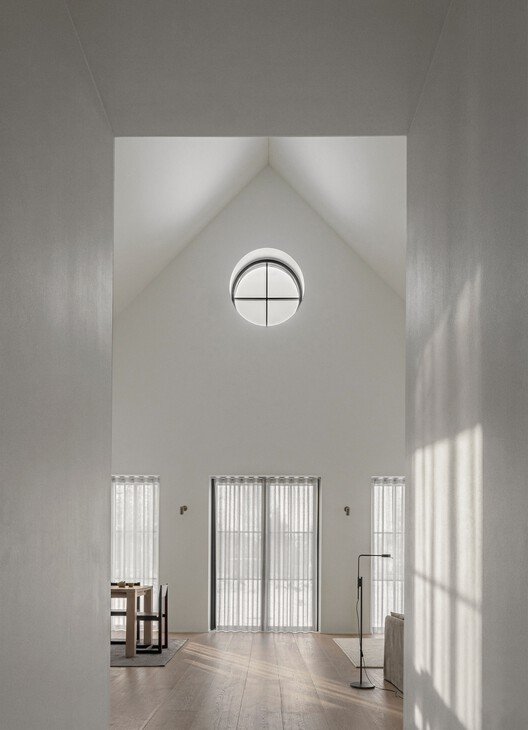
This house is built on a site along a bank in Toyama City overlooking the Tateyama mountain range.

This house is built on a site along a bank in Toyama City overlooking the Tateyama mountain range.

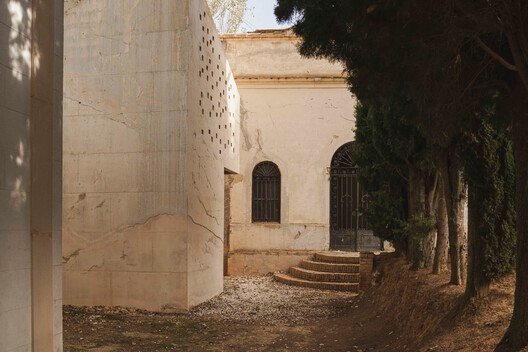
The role of heritage rehabilitation in the contemporary architectural landscape is shaped by a wide range of research, beliefs, memories, and efforts aimed at redefining and strengthening our built environment. When undertaking a transformation, renovation, or preservation project, architects can employ diverse strategies and tools to encourage a meaningful coexistence between what already exists and what is newly introduced. Together with three Madrid-based architecture practices—SOLAR, Pachón-Paredes, and BA-RRO—we set out to engage in conversation and explore their creative processes and ideals, recognizing the complexity and value of historic buildings as repositories of materials, structures, and construction techniques from other eras.

Located in Leslieville, in Toronto’s east end, this loft renewal project set out to enhance the interior both aesthetically and functionally. Once a toy and bottling factory throughout the 1900s, the building became live/work lofts in the early 2000s. As time wore down the quality of finishes and fixtures, a new opportunity emerged to rework the loft’s spatial dynamics.

Ausiàs Pérez of T.O.T Studio and Paloma Bau open the doors to Sornells 21, their shared studio in the Valencian neighborhood of Ruzafa, transforming a former commercial unit into a creative workspace inspired by the urban imagination of Tokyo. The intervention combines a strong conceptual narrative with a carefully executed material strategy, shaping a place where design, community and creativity converge.

Entremontes House is a single-family residence located on a rare urban site between two hills that shape the skyline of Montenegro, in southern Brazil. Set on a 5,000 m² plot, the project embraces a unique condition where urban infrastructure coexists with natural landscapes. Designed by Harpa Arquitetura, the house explores this duality by carefully mediating the relationship between city and nature.

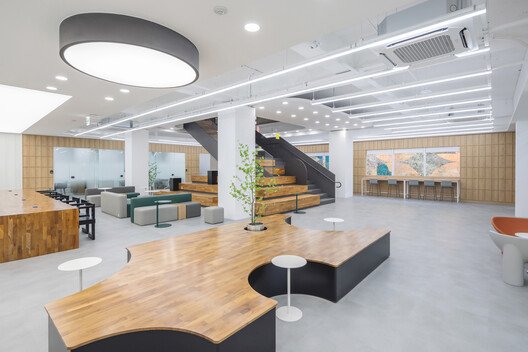
Intervening at the head office of Imabari Shipbuilding’s Marugame Site presented an opportunity to reorganize the working environment of multiple parties involved in the construction of large tankers, formerly scattered across a vast industrial area of 0.88 km².

With only two days left to vote, this is your last chance to pick your favorite projects of 2025 and help showcase the most influential architecture of the moment. There are 75 finalists to choose from in 15 different categories, with voting ending on February 18, 2026 at 18:00 EST.

The new structure enters the existing building on its own terms. A row of thin metal poles carries an I-beam stretching from front to back. When needed, beams are interrupted. These cuts are exposed and celebrated. The new elements are painted in bright red and blue. They occupy positions within the space that are deliberately disruptive, blocking doors, windows and passages. Because of that inconvenience the structure becomes visible. It is an active participant of the space.Â

Ekadea Studio is a ceramic workshop shaped to envelop: its form is born in shadow and accompanies those who cross its threshold. Curved walls rise from the base and define functions, paths, and boundaries. A wooden structure, perforated to frame glimpses or solid to accommodate residual spaces, establishes a rhythm of thresholds and shelter.

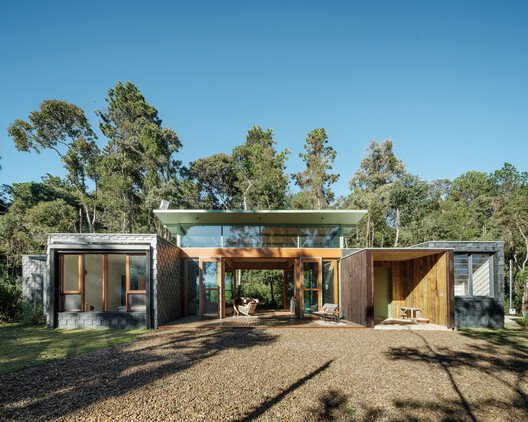
This project arises from a simple question: how to create architecture in the tropics without competing with the forest, but rather learning from it?