Blog

An Educational Farm on the Roof / rerum architectes

A new greenhouse and an educational pavilion transform the rooftop of Collège Flora Tristan into a productive and pedagogical urban farm. Located atop a secondary school in Paris, the project supports the work of Veni Verdi, an urban agriculture association that cultivates fruits, vegetables, and flowers as part of the school’s educational program. The rooftop, originally intended as a school playground, already offered spatial qualities compatible with productive use. Through a participatory budget from the City of Paris, the project enhances this unique agricultural setting while embracing a frugal approach aligned with environmental and financial constraints.

Read More »

Lelis House / Memola Estúdio

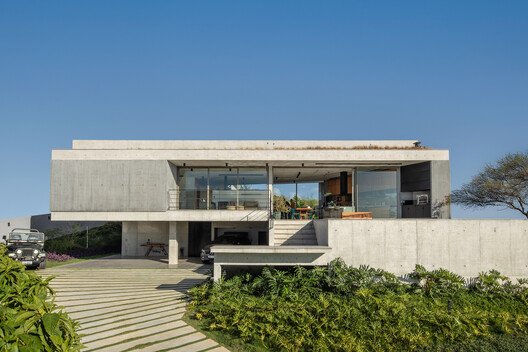
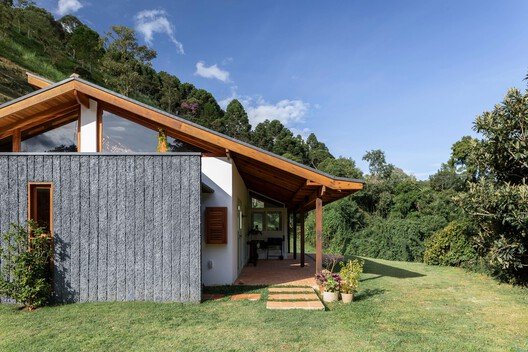
Initially envisioned as a renovation of an existing house, this project evolved into the creation of a new residence, located on the same lot as the old construction. The underlying question of the architectural concept, therefore, is the balance between the new and the memory of the qualities of the old, so as to make the new house a fulfillment of the clients’ desires while also establishing a connection with the past life at the site. The challenge was to achieve more space and better conditions for the interaction of residents and their guests, both inside and outside the house, while maintaining familiarity with the land and its shelter.

Read More »

Stefan Żeromski Theatre / WXCA

Presented by the European Union and the Fundació Mies van der Rohe, the award has for decades recognized outstanding achievements in contemporary architecture. For the third time, the prestigious nomination has gone to the architects of the WXCA studio. This time, the jury acknowledged the craftsmanship behind the revitalization of the historic Stefan Żeromski Theatre in Kielce. One of Poland’s oldest theatrical venues has not only regained its former splendour but has also gained staging capabilities unique on a European scale.

Read More »

Tracing Frank Gehry’s Architectural Legacy Through His Most Influential Works

Following the news of Frank Gehry’s passing at age 96, renewed attention has been directed toward a career that significantly shaped architectural discourse from the late 20th century onward. Over more than seven decades, Gehry developed a design language defined by material experimentation, iterative model-making, and an interest in fluid, expressive forms. His work ranges from early residential interventions in Southern California to major cultural institutions that have contributed to the identity of cities around the world. Together, these projects outline a trajectory that intersected with shifts in fabrication technologies, museum typologies, and urban redevelopment strategies.

Read More »

The Future of Cities: How Can We Build Differently to Promote Resilient and Low-Impact Environments?

How does the construction sector shape the future of cities? What challenges does it face? At the crossroads of demographic, social, energy, and climate pressures, the construction sector is changing fast. Professionals, institutions, and citizens are working together to build environments that improve health and well-being, encourages durable and place-responsive solutions, cut carbon emissions, withstand climate risks, and provide affordable, high-quality housing.

Read More »

House Comet / GAISS

House Comet is a dwelling for a young and creative family in a green, secluded neighborhood of Riga near the Daugava River. The interaction of urban and rural scenes is the impulse for a vivid red house with a gleaming triangular roof, featuring terraces and openings for active outdoor living.

Read More »

The Aesthetics of Power: Soviet Modernism Meets Uzbek Tradition in Tashkent’s Palace of Peoples’ Friendship

Tashkent, the capital of Uzbekistan and one of the oldest cities in Central Asia, has long been shaped by a hybrid culture. Located at a strategic point along the Silk Road, the city developed an architectural tradition defined by inner courtyards, domes, decorative ceramics, and Islamic geometric patterns. The annexation by the Russian Empire in the 19th century introduced administrative buildings, orthogonal squares, and straight avenues, creating a dual urban fabric — between the “old” Eastern city and the “new” European one — in which contrasts and overlaps became the norm.

Read More »

Enor Showroom / studioknot

The ENOR showroom is built on the concept of ‘the beauty shaped by natural randomness.’ ENOR designs womenswear inspired by natural forms and organic patterns, capturing the irregularity and unpredictability found in nature. Our intention was to translate this attitude into spatial language, weaving the raw qualities of materials and the sensorial depth of natural textures throughout the interior.

Read More »

The Blue Rotary Membrane Bridge / People’s Architecture Office

PAO (People’s Architecture Office) has inserted the Rotary Membrane Bridge installation into the public space through a gentle intervention approach. Using materials, light, and interactive design that harmonize with the site, it injects vitality and color into the space, making it an urban visual landmark that combines artistry and high communicability.

Read More »

The Ponto C – Culture and Creativity / Galeria Gabinete

The Ponto C – Cultura e Criatividade project is more than just a new space in the city of Penafiel. It contributes to a transformation in the city’s urban fabric. A new entrance and a new connection with the southern area allow for structured expansion, putting aside the phrase that echoed for years as “the city split down the middle.” A renewed proximity with the historic center: what was once “the back” is now a carefully designed front, facing Praça de S. Martinho.

Read More »