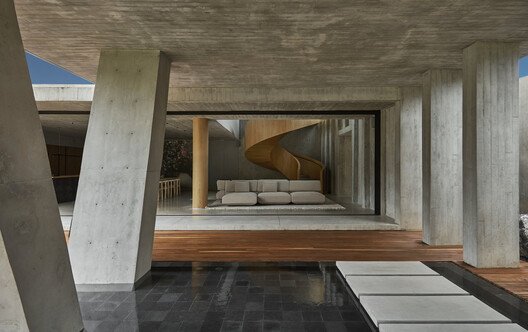
Yield House / Splyce Design
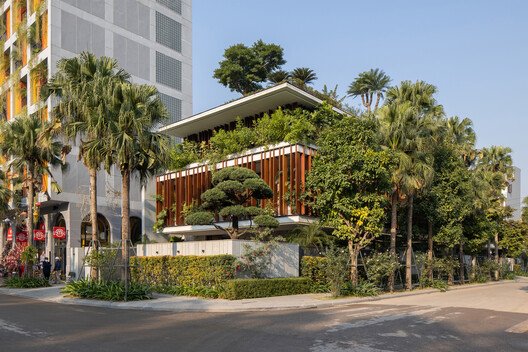
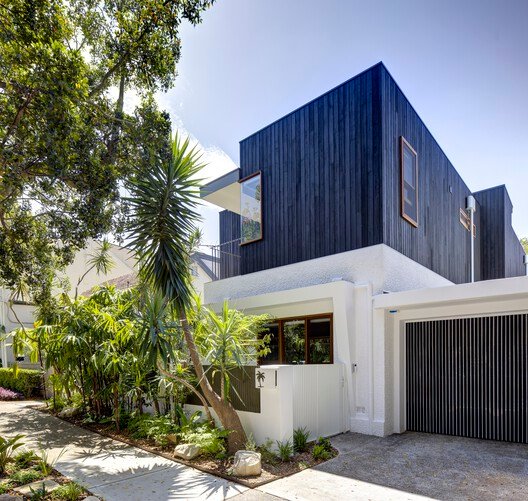
Located in Vancouver’s westside on an east-west oriented site, the Yield House was designed for hosting multiple family guests throughout the year.
Bistro Ferdinand, located in Bratislava’s iconic Sad Janka Kráľa park, was designed following a public tender for a new tenant. The project revitalized the original pavilion by architect Ferdinand Konček from 1982, which was renovated in 2024 by Jan Studený and Peter Stec. The interior aims to reflect the atmosphere of the park and foster a sense of community. Conceived as the main bistro of the park, Ferdinand is open, inclusive, and welcoming.
The house is located at the top of a hill, which provides a beautiful view of the forest in front and the city of São José in the background. To adapt to the irregular shape of the land, the house’s layout fits within the projection of a triangle, arranged in an L shape within it.
Zaha Hadid Architects, in collaboration with RINA as team leader, Studio Plicchi, WSP, STI Engineering, and BC Building Consulting, has won the international competition to design Malpensa Hospital (Grande Ospedale della Malpensa) in Italy. Commissioned by the Lombardy Regional Health Authority, the project will consolidate the existing Gallarate and Busto Arsizio hospitals into a single medical campus serving the area between Milan and Varese, with a catchment of nearly one million residents.
Noor Riyadh 2025 brought large-scale light installations to public sites across the Saudi Arabian capital, temporarily transforming transit hubs, historic districts, and significant landmarks into illuminated urban environments. From November 20 to December 6, 2025, Riyadh became a citywide gallery of light, motion, and shifting perception. The festival’s fifth edition featured 60 artworks by 59 artists from 24 countries, including more than 35 new commissions, responding to the theme “In the Blink of an Eye.” Through light as both medium and concept, the installations reinterpreted the capital’s rapidly evolving architectural landscape and reflected how perception shifts in spaces shaped by heritage and ambitious urban development.
MVRDV has completed construction on the Pujiang Platform, a viewpoint comprising an arched, earth-covered timber pavilion perched among the hills to the south of Chengdu. The project serves as both a visitor destination and an event space that takes advantage of the spectacular natural beauty of central China. Designed to blend into nature while also standing out as a beacon when seen from the plains below, the structure of earth-covered timber arches takes a telescopic shape, drawing visitors to the expansive viewing window and balcony that projects out over the slope.
For several years now, the countryside has ceased to function merely as a picturesque counterpoint to the city and has instead become an active laboratory for new relationships between territory, landscape, and people. Here, environmental urgency meets collective memory; ancestral techniques converse with architectural experimentation; and local communities act as curators of their own territory. Contemporary rurality emerges less as a geography and more as a culture—inscribed in ways of life that care for the environment.
The Mountain Shelters are part of the “The Vagar Country House” development project in Belmonte, Portugal. The challenge was to create an object that would evoke the imagery of traditional Shepherds’ Shelters, taking advantage of the natural and untamed qualities of the land, which spans nearly 250 hectares.
Design of a house located on a 1-hectare rural property in Cunha, São Paulo, situated on a plot of land that had been previously cleared for sale, a common situation in rural subdivisions in São Paulo. In this context, in addition to the architectural design of the residence, an environmental analysis of the existing rural network and a study of the other programs located throughout the property were requested.
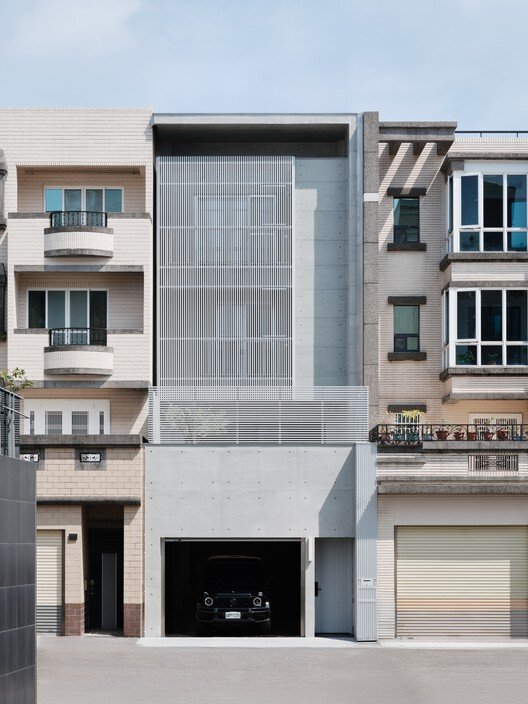
Johnnie Walker established its brand identity by tilting the gentleman on its label 24 degrees, diverging from the strictly horizontal and vertical norms of its time. This notion of “tilt” inspired the exploration of new architectural possibilities within Tokyo’s tightly regulated micro-lots.