
There is no such thing as a trouble-free self build project. Some builds will be easier than others, but regardless of how thoroughly you have planned your project, there will be lots of little issues that will invariably crop up. As soon as you’ve dealt with one thing, the next is not far away. It’s
The post 10 of the Most Common Pre-Start Self Build Mistakes to Avoid appeared first on Build It.
There is no such thing as a trouble-free self build project. Some builds will be easier than others, but regardless of how thoroughly you have planned your project, there will be lots of little issues that will invariably crop up.
As soon as you’ve dealt with one thing, the next is not far away. It’s perfectly normal and is all part of the fun and challenge, as each problem solved represents a little victory. However, there is a difference between dealing with these common issues and tackling serious mistakes that can add time and cost to your scheme by delaying progress. So, here are 10 of the most common self build mistakes and how to avoid them.
1. Not having a soil survey done
You will never know the true cost of your self build until the foundations are complete and you are ‘out of the ground’. Standard strip foundations will be factored in to most projects’ cost estimations, but more complex engineered solutions such as piled foundations can add a significant sum, and therefore put pressure on your budget.
Factoring this in from the start is important, and the only way you are going to know if you need more robust foundations is to have a survey done. That said, your first port of call should always be your local building control officer who will probably have experience of ground conditions through previous work in your area.
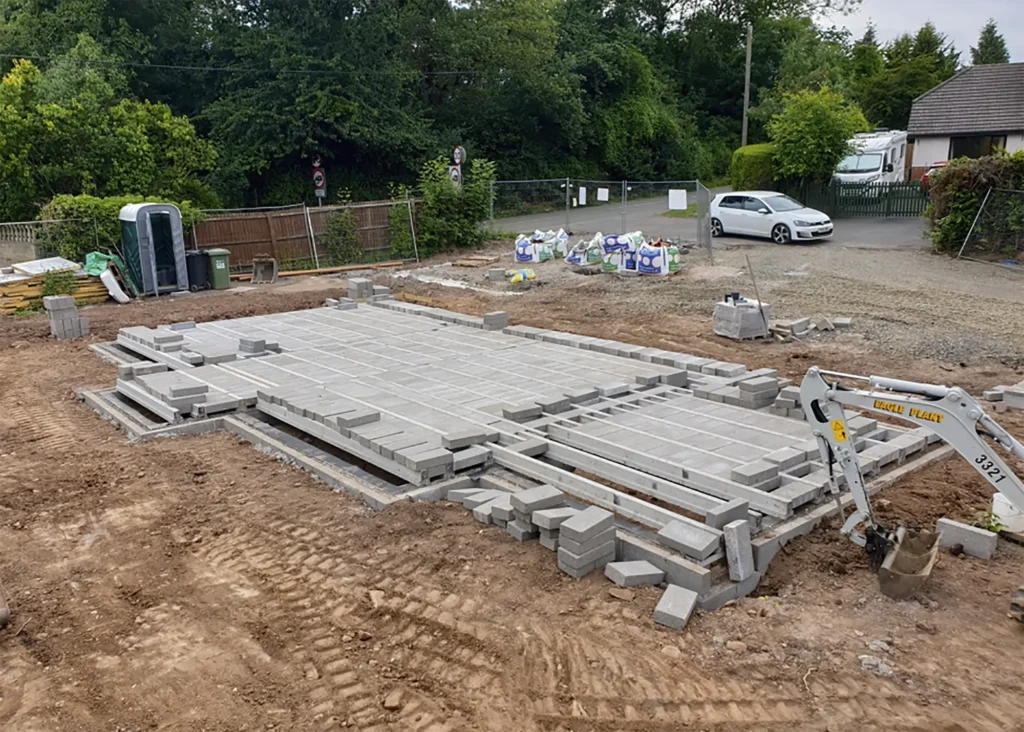
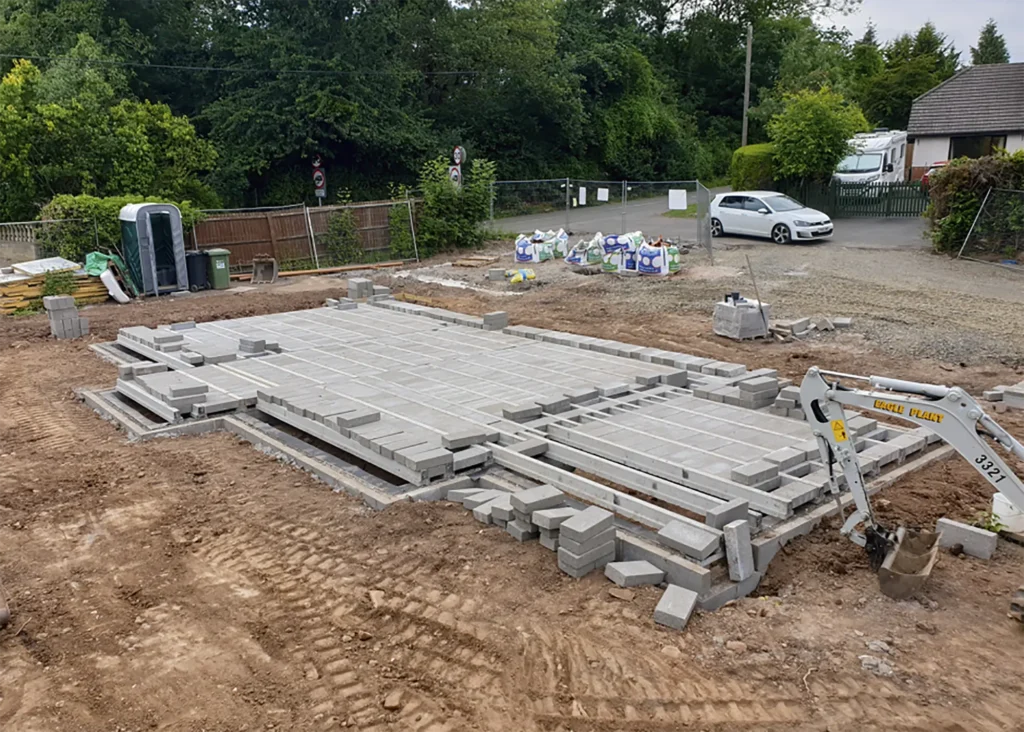
A beam and block ground floor in preparation for a structural frame and encapsulation system from Oakwrights
They may well ask for confirmation of what they suspect is down there, by getting a 1m³ hole to be dug close to where the footings will go, so that they can carry out a physical check, usually free of charge. This is normally enough to reveal the presence of anything untoward in the soil.
2. Not clearing legal issues with the plot
When you are looking at the viability of a plot or project, it is vitally important to ensure that any legal obstacles that might prevent you building what you want have been cleared.
This invariably involves a competent solicitor and therefore some cost, but it is money well spent. On a greenfield site, things like easements and wayleaves for services/access must be established. Plus, the possibility of covenants and ransoms or ancient rights of way should be addressed.
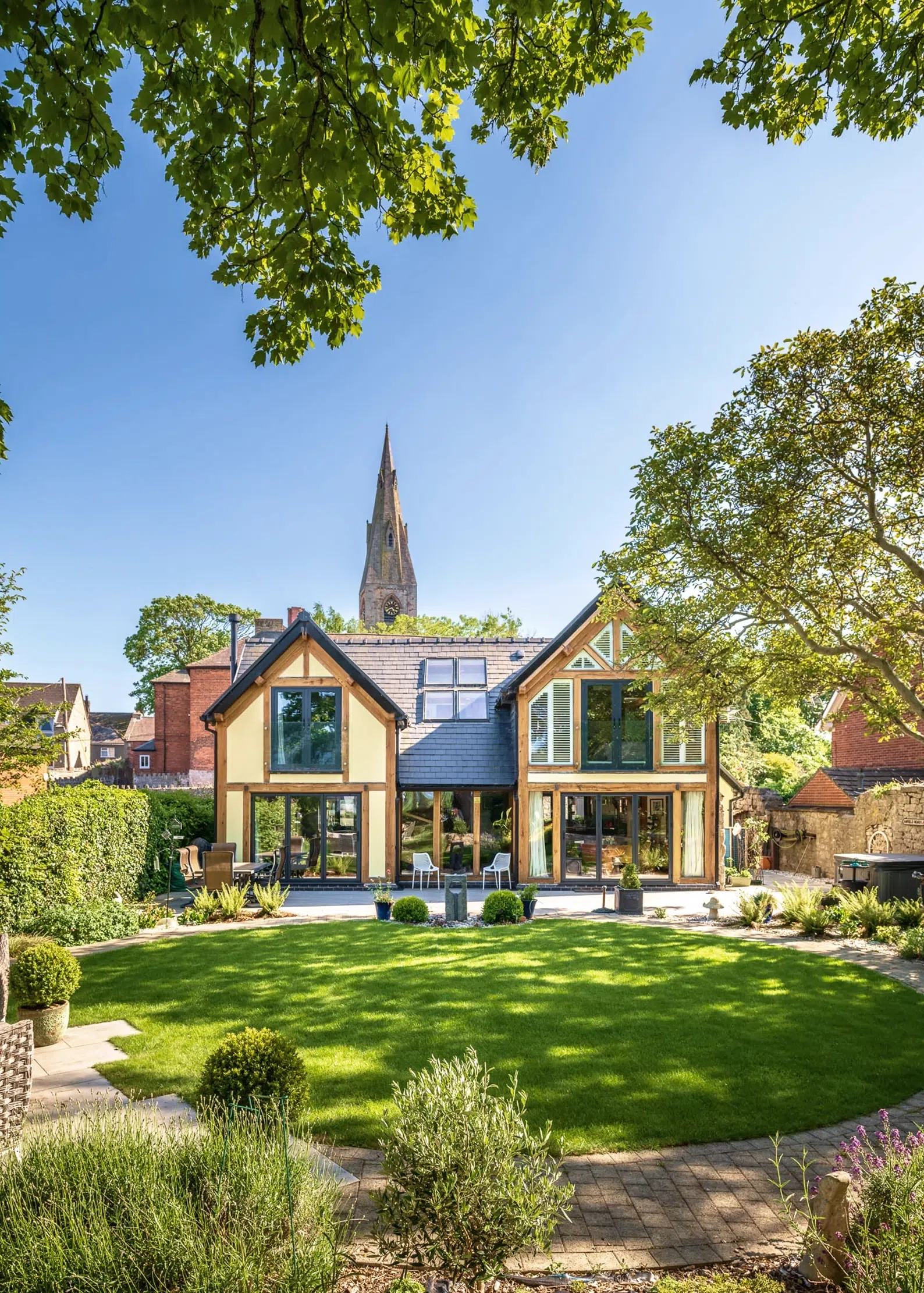
Moira and Tony Cain bought an old walled plot in a medieval market town in Wales, and built a characterful oak frame home for just £250,000 that blends modern living with historical context. The plot was surrounded by an old 10ft stone wall on two sides with another stone wall through the middle, which had been identified as being part of the town’s original defence wall, giving the land historical importance status. Photo: Nikhilesh Haval
If you ignore the prospect of a legal obstacle and subsequently find you have to deal with it, it can be a nightmare. I was advising one client recently who had bought a semi-completed self build project that was situated on a difficult plot. Piled foundations were already in but during the course of the conversation, it became apparent that there was no established right of way for access to the plot, and that the owners of several adjacent properties controlled the only entry point.
While not impossible to resolve, it was clearly going to involve a lot of money to persuade them to grant access. Without that permission, the plot was pretty much worthless. No wonder
the previous owner had elected to abandon the site and sell it on.
The post 10 of the Most Common Pre-Start Self Build Mistakes to Avoid appeared first on Build It.