
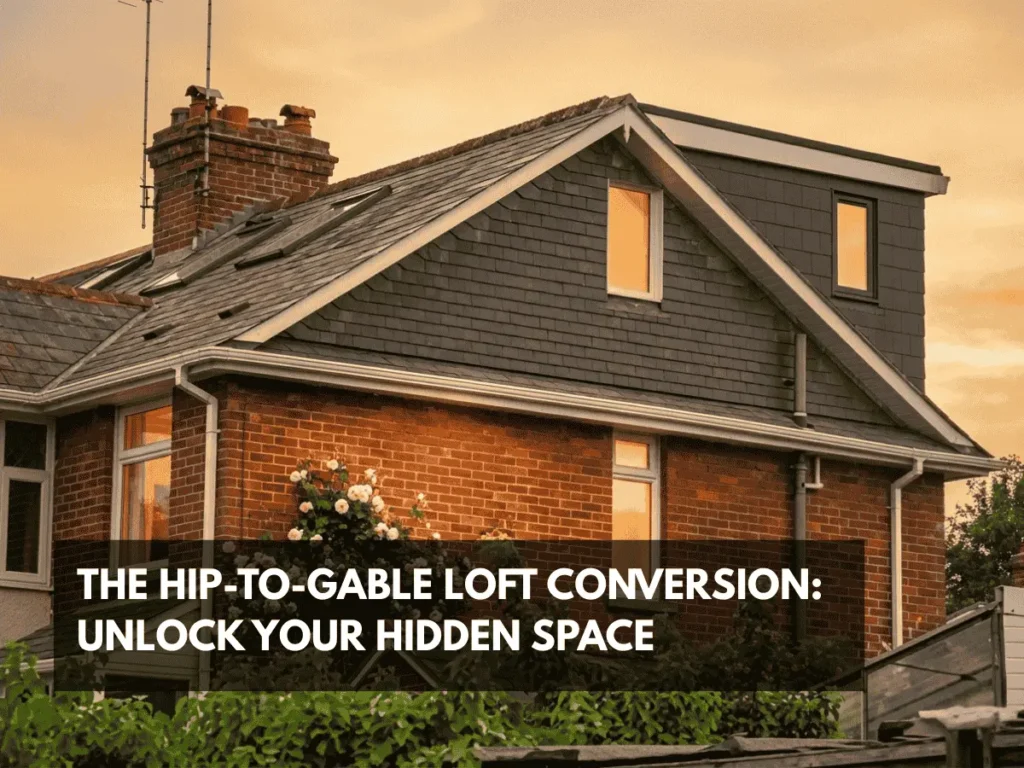
If your residence in the UK is a semi-detached or detached house, particularly if it is a delightful 1930s style, you are probably well aware of the “sloping roof” problem. The hipped roof is very enchanting from the street, but the inward slope really restricts your attic headroom, thus making a standard conversion feel either cramped or even worse, impossible.
This is where the hip to gable loft conversion comes into play. It is a very popular method for increasing liberty on the floor and at the same time securing a big increase in property value without incurring the huge costs of buying a new house. What follows is an exhaustive and easy-to-understand guide to the process of making over your roof space.
What Exactly Is a Hip-to-Gable Loft Conversion?
First, picture a typical semi-detached or detached British house. Look at the side of the roof. If it slopes inwards at an angle (a ‘hipped’ end), that’s your ‘hip’. The vertical wall at the end of the house, under the guttering, is the ‘gable.’
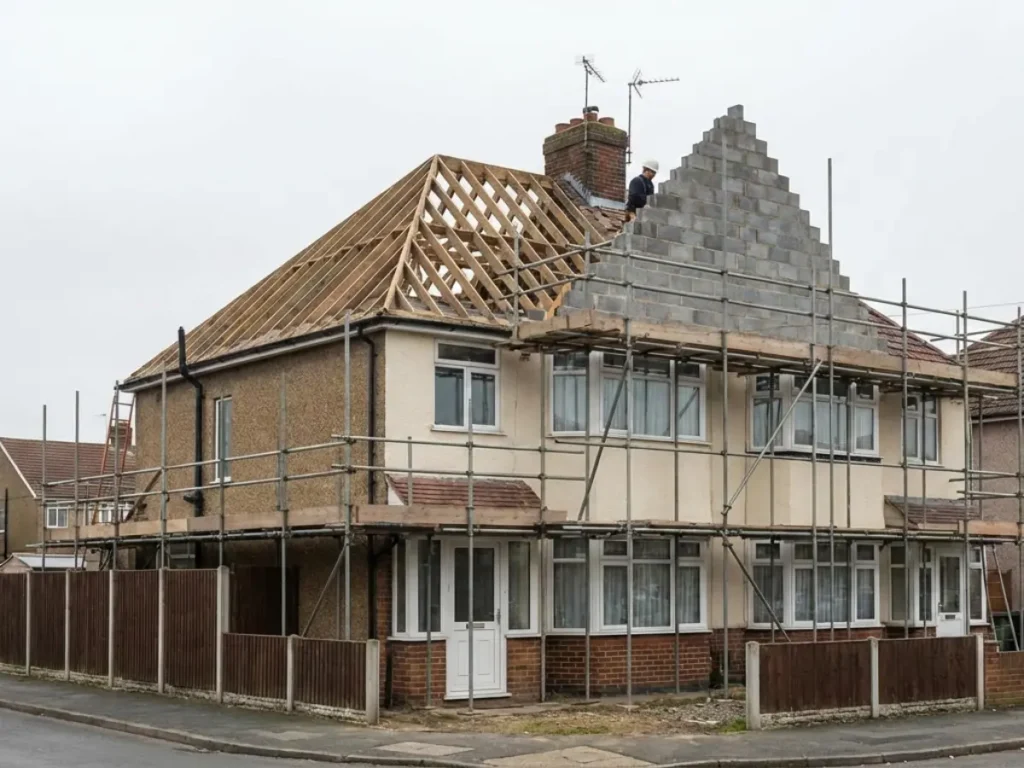
A hip-to-gable conversion quite simply takes that sloped, inward-angled section of the roof and builds it upwards to create a new vertical wall (the ‘gable’). It’s like giving your roof a more square, box-like shape at the side. This one change creates a cavernous amount of new, usable space inside the loft – far more than just adding a dormer window alone.
Why Are UK Homeowners Looking Up for Hip-to-Gable Loft Conversions?
This isn’t just a construction tweak; it’s a lifestyle game-changer. Here’s why it resonates so powerfully on our shores:
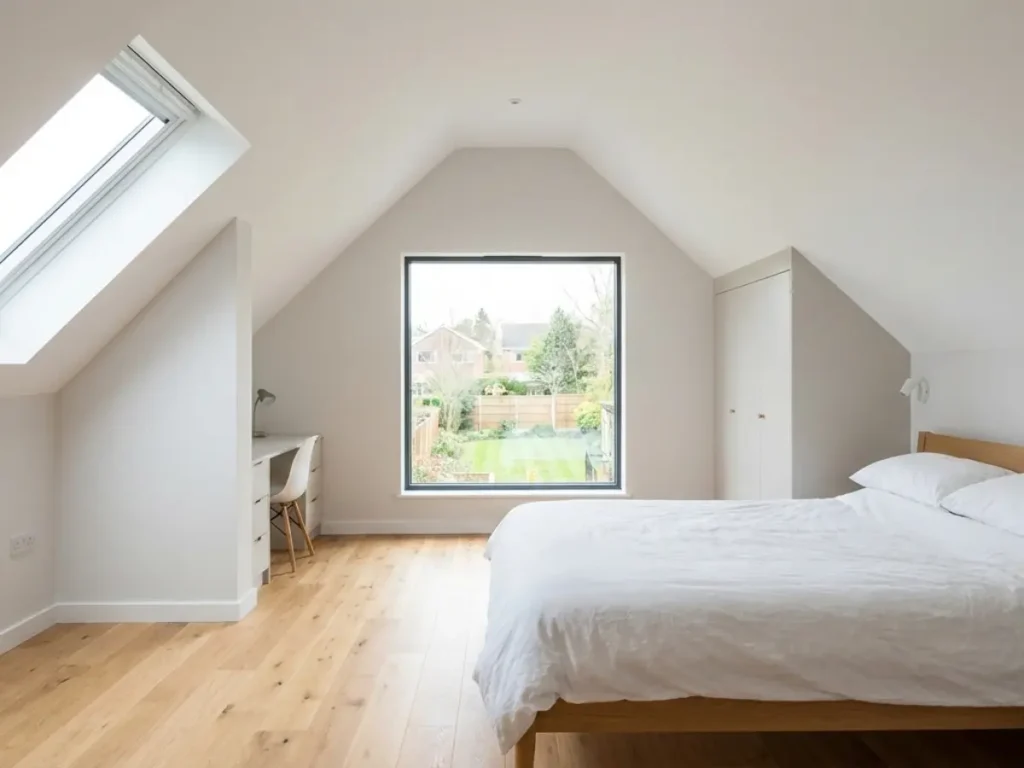
- The Space You Actually Need: That extra volume is transformative. It often means you can fit a king-sized bedroom with a proper ensuite bathroom and built-in storage. No more compromises. It’s the difference between a box room and a master suite.
- Planning Permission Often Sorted: Crucially, a well-designed hip-to-gable conversion will frequently fall under your Permitted Development (PD) rights, meaning you might not need full planning permission. There are rules (volume limits, materials must match, etc.), but a good architect or specialist builder will navigate these for you. Always, always check with your local authority’s duty planner first, though.
- A Smarter Financial Move: Compared to the cost and upheaval of moving, a loft conversion offers outstanding value retention. In many parts of the UK, you can expect to recoup a significant portion of your investment while gaining the space you need. It’s an investment in your quality of life and your asset.
- Light and Views: With the new gable wall, you have the perfect place for a lovely window, flooding the new room with natural light and offering a proper view, not just a glimpse of sky through a rooflight.
- The “Forever Home” Maker: It allows families to stay put in a beloved neighbourhood, near good schools and friends, by adapting their house to growing needs. It solves the problem without the need for a ‘For Sale’ sign.
The Journey, Not Just the Job: What to Expect
Embarking on this project is a partnership with your chosen builders. It’s not a silent process, and knowing what’s coming helps.
- The Dreaming Stage: This is where you talk to specialists, get ideas, and have an architect or designer draw up plans. They’ll assess your specific roof structure and advise if a hip-to-gable is your best solution.
- The Paperwork Stage: Your team will handle the technical drawings for Building Regulations approval (non-negotiable – this ensures it’s structurally sound, insulated, and safe). They’ll also ascertain if it’s a PD application or needs full planning.
- The Build (Keeping the Tea Flowing): The work is substantial but methodical. Scaffolding goes up. The existing hip rafters are carefully removed, the new gable wall is built, and the new roof structure is tied in. It’s noisy at times, but a professional crew will keep disruption to a minimum, protect your property, and keep you informed. Expect to hear the steady rhythm of progress above you.
- The Transformation: Once the shell is watertight, the magic happens inside: insulation, plasterboarding, electrics, plumbing for that ensuite, and decorating. This is when it starts to feel like your new room.
Reasons for Selecting Hip to Gable?
Not only “more space,” but also this particular type of conversion brings out many favorable features for the UK residential community.
1. Best Headroom
Moving the wall outward gives you standing room right at the point where the steps usually meet the floor. It allows for a nice and even installation of the staircase—a solution to the common problem of loft conversions—the most difficult part of the whole project.
2. Space for Decadence
The extra height generally results in a large master bedroom with a luxury bathroom next to it, or even a dressing room or a small office in some cases.
3. An Attractive Look
A hip to gable conversion that is properly planned can look “tacked on” less than some square wasy dormer extensions, and it can be made to blend perfectly with the original house by using the same bricks, render, and tiles.
4. Increased Market Value
A first-rate loft conversion has the potential to double your home’s value, especially in places like London and the South East where demand is high.
The Big Question: Do I Need Planning Permission?
This is the question most frequently asked by homeowners. The answer is… probably no, but then again, there are regulations. The majority of hip to gable conversions seem to be getting Permitted Development (PD) rights. In other words, it is not necessary to submit a full planning application if you remain within the limits set out below:
- Volume Allowance: An extra of 50 cubic meters (50m3) of roof space is the maximum addition allowed for semi-detached and detached houses.
- Height: The extension must not go past the height of the current roof ridge.
- Materials: The materials should look like those of the existing house.
- Balconies: No balconies or terraces are allowed (though Juliet balconies are usually allowed).
When You Will Need Planning Permission
- If you live in a designated spot (Conservation Area, National Park, Area of Outstanding Natural Beauty).
- If you have already utilized the Permitted Development rights for past extensions.
- If your plan is to add a big front-facing dormer or go beyond the volume restrictions.
Pro Tip: Even when you go for Permitted Development, it is advisable to apply for a Lawful Development Certificate from your local council. This will be the official proof you would need to transfer the house later on, verifying that the construction was legal.
The Essentials To Consider
Three essential structural and legal matters must be taken care of before one starts selecting the colour of the paint.
1. The Party Wall Act
In case you possess a semi-detached or end-of-terrace house, then actually you have a common wall with your neighbor. The creation of this wall is governed by the Party Wall etc. Act 1996. A Party Wall Notice must be given to your neighbor. If he opposes (or does not respond), then a surveyor will be needed to prepare a Party Wall Award.
2. Structural Integrity
A hip roof converted to gable alters the way the roof’s weight is shared. A structural engineer will be needed to determine the amount of steel required for the new floor and roof supports.
3. Building Regulations
No matter the planning permission status, all loft conversions must be acknowledged by Building Control. The following will be checked:
- Fire safety (fire doors, smoke alarms, escape routes).
- Insulation (thermal efficiency).
- Structural stability.
- Staircase design (pitch and headroom).
Be realistic. Get multiple, detailed quotes. Budget for contingencies (a wise rule for any home project). Talk to your neighbours as a courtesy – the Party Wall Act may come into play if you’re in a semi or terrace. And most importantly, choose your builder not just on price, but on reputation, communication, and a portfolio of similar work you admire.
How Much Does It Cost?
Costs vary depending on your location, the finish quality, and the size of the roof. As a general guideline for the current UK market:
- Shell only: £35,000 – £45,000 (builders do the structure; you finish the interior).
- Full “turnkey” project: £45,000 – £65,000+.
Factors that increase cost:
- Moving water tanks or chimneys.
- High-spec bathroom finishes.
- Complex Party Wall agreements.
- Asbestos removal.
The Timeline: What to Expect
From the moment you decide to go ahead, here is a rough timeline:
- Design & Planning (4–8 weeks): Architect drawings, structural calculations, and submitting for a Lawful Development Certificate.
- Party Wall (2–8 weeks): This runs concurrently with design but can drag on if neighbours are difficult.
- Construction (6–10 weeks):
- Weeks 1-2: Scaffolding, materials arrival, opening the roof.
- Weeks 3-4: Structural steels, building the new gable wall, weatherproofing.
- Weeks 5-7: Internal stud walls, insulation, plasterboarding, first fix electrics/plumbing.
- Weeks 8-10: Plastering, second fix (lights, sockets), carpentry, painting.
The Final Result: More Than Just an Extra Room
A successful hip-to-gable conversion isn’t just measured in square metres. It’s the sound of a teenager finally having their own sanctuary. It’s the luxury of a quiet, sunlit home office that doesn’t double as the dining table. It’s the guest room that welcomes family properly, or the serene retreat you escape to at the end of the day.
In a nation of ingenious space-savers, the hip-to-gable conversion is a masterstroke. It’s about working smarter with what you already have, looking upwards, and discovering that the perfect room was waiting for you all along, right under your own roof